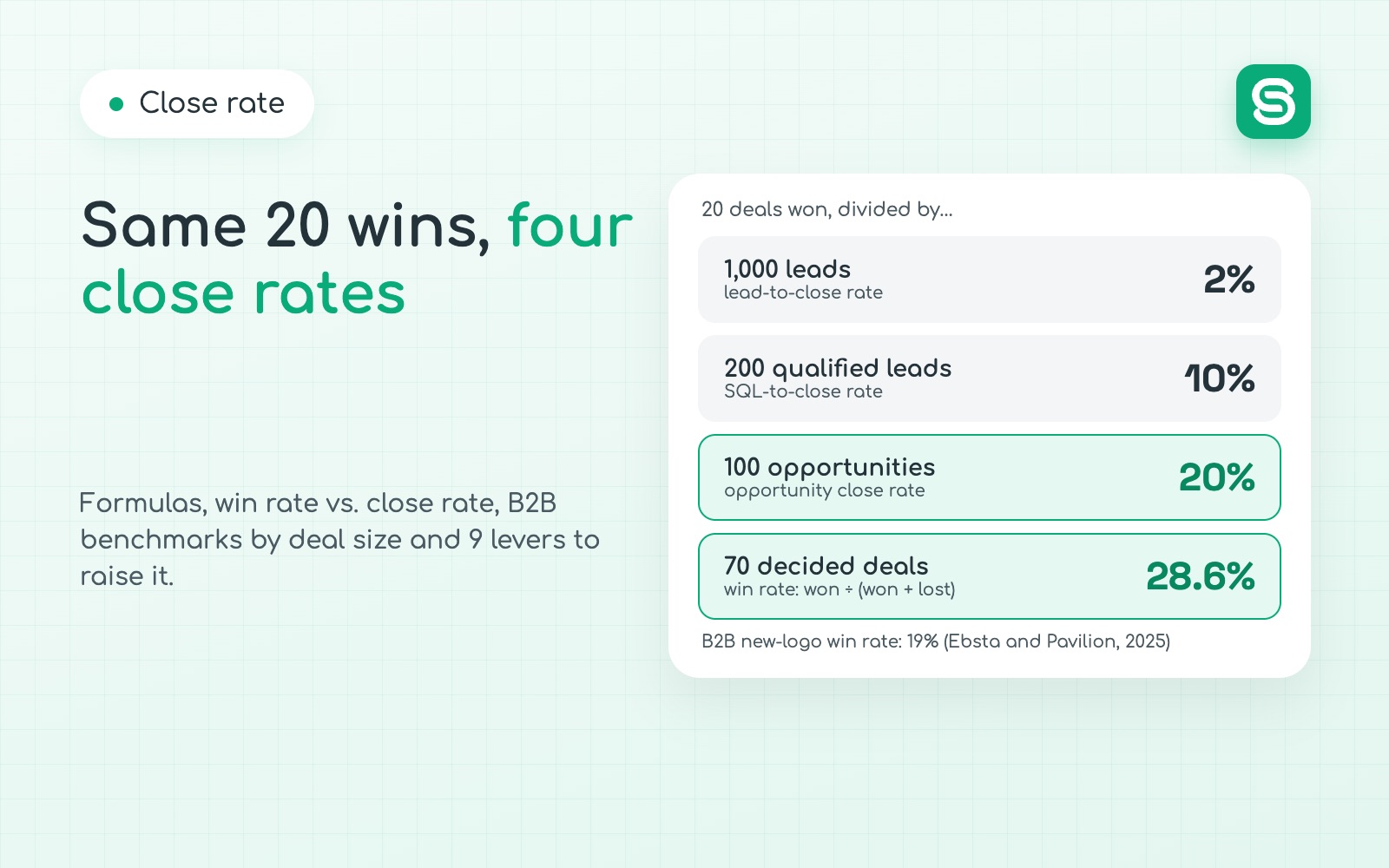
Close rate is the share of deals you win, but the number you get depends entirely on what you divide by. This guide gives the three formulas in use and when each one is right, the difference between win rate and close rate, sourced B2B benchmarks by deal size, the denominator traps that make a team look better or worse than it is, a free calculator, and nine levers that actually raise the number.
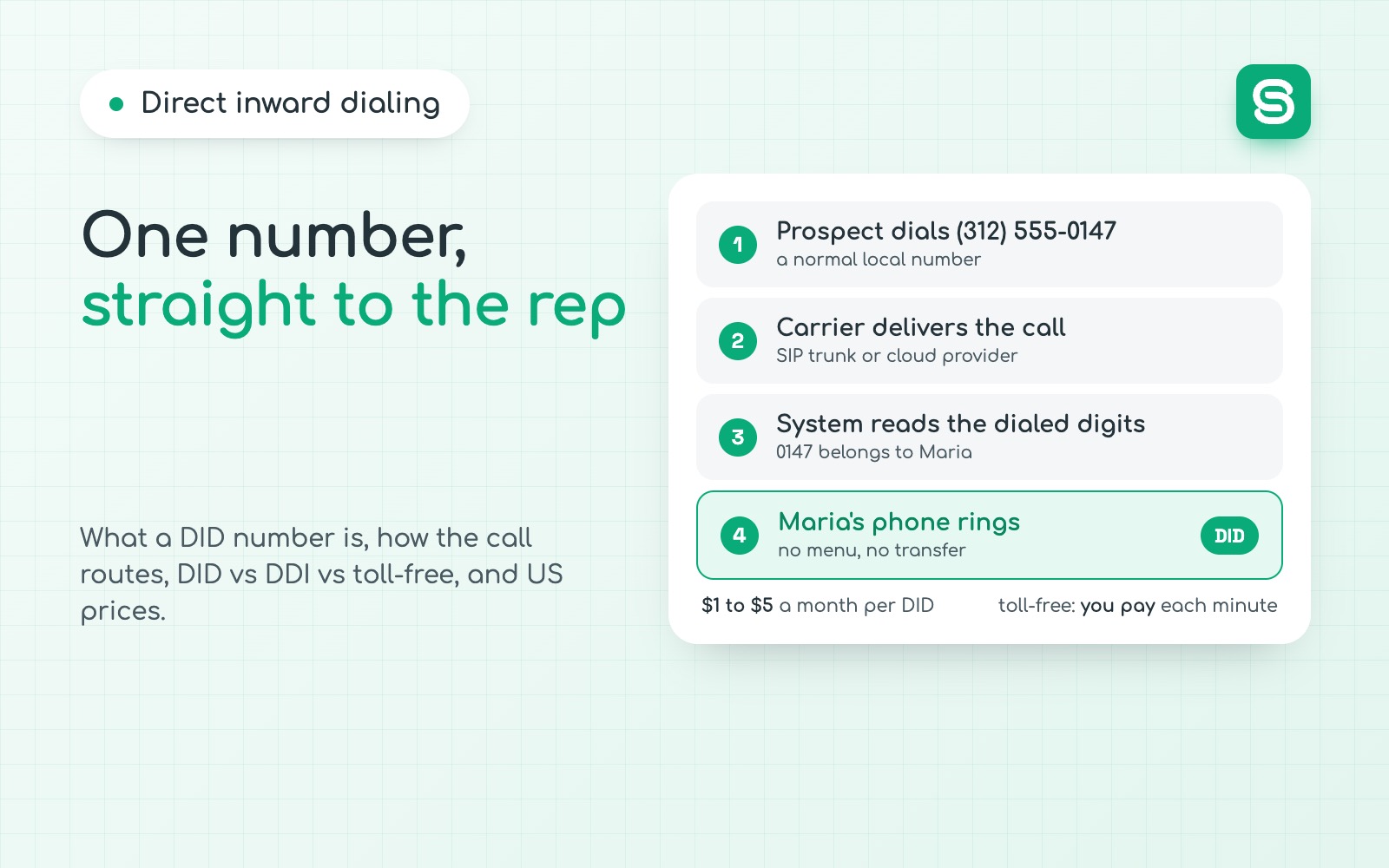
Direct inward dialing (DID) gives every person or team in your company a phone number the outside world can dial, without going through a main line, a menu or a receptionist. This guide explains how a DID call actually travels from the caller to a desk phone or an app, the vocabulary that trips buyers up (DDI, DOD, DNIS, extensions), how a DID differs from a virtual number and a toll-free number, what DIDs cost in the US at list price, and when a sales team needs one direct number per rep.
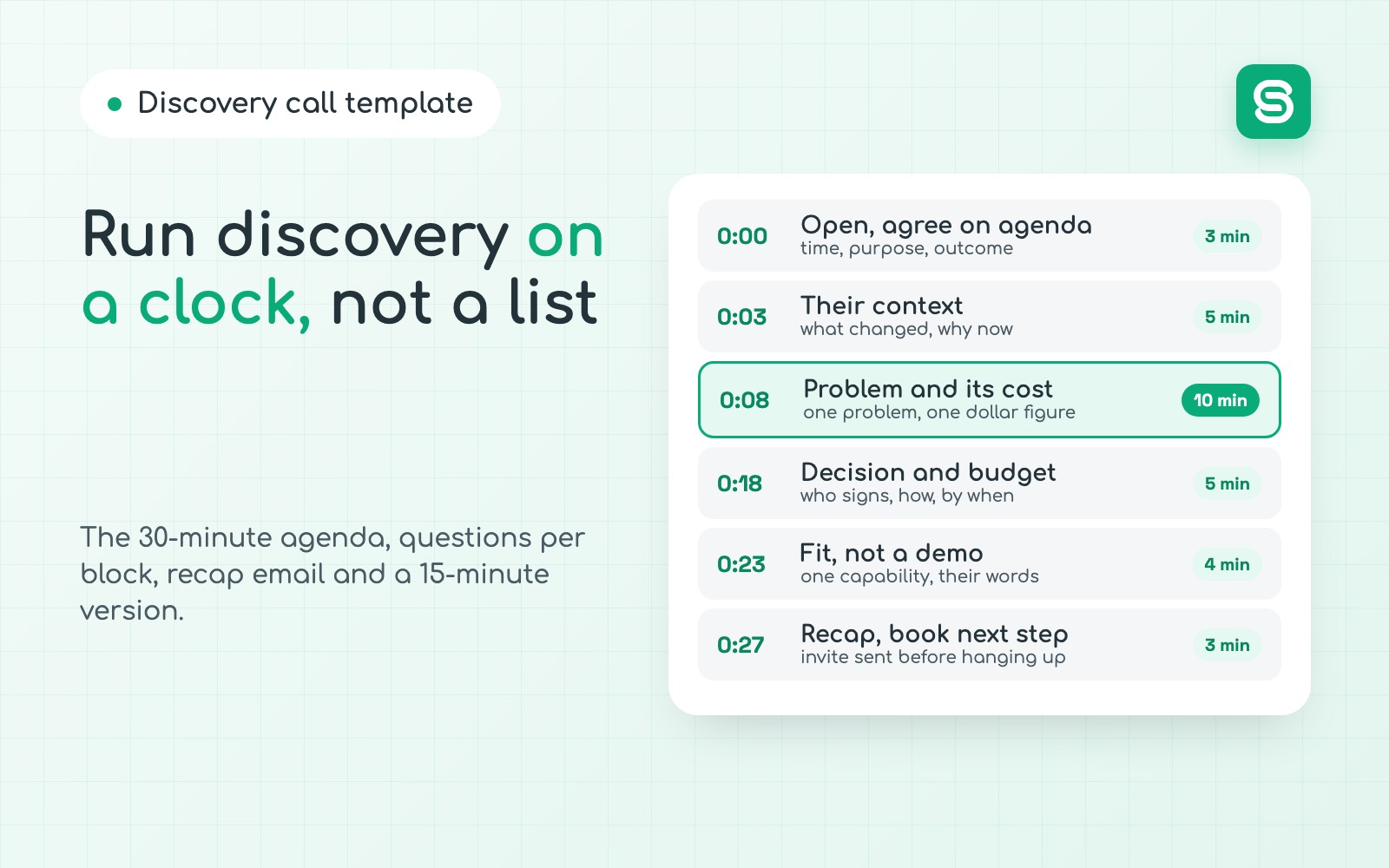
A discovery call template that works is a timed agenda, not a list of 50 questions. This guide gives you the full 30-minute discovery call: six timed blocks, the questions for each block, a note-taking sheet, the exit decision at minute 27, the recap email, a 15-minute version for smaller deals and a checklist to grade yourself after the call. Everything is ready to copy.
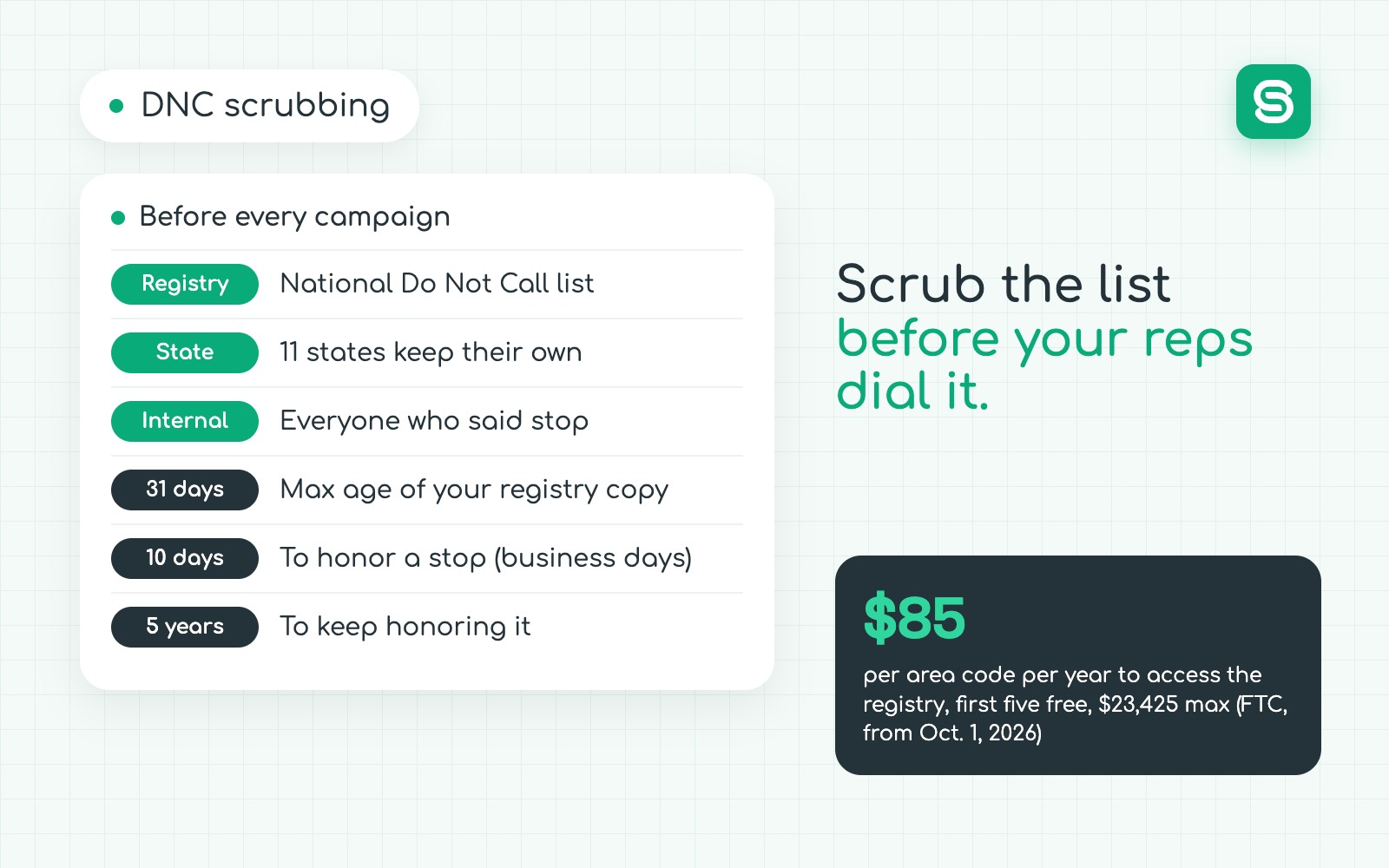
DNC scrubbing means removing from your call list every number you aren't allowed to call: numbers on the National Do Not Call Registry, on state do-not-call lists and on your own internal list. This guide walks a US B2B sales team through it: how registry access works (SAN, $85 per area code, first five free), the 31-day rule, the state lists, the internal list everybody needs, what the B2B exemption really covers and where it stops, cell phones, a step-by-step procedure, what it costs and how to document it in case someone sues.
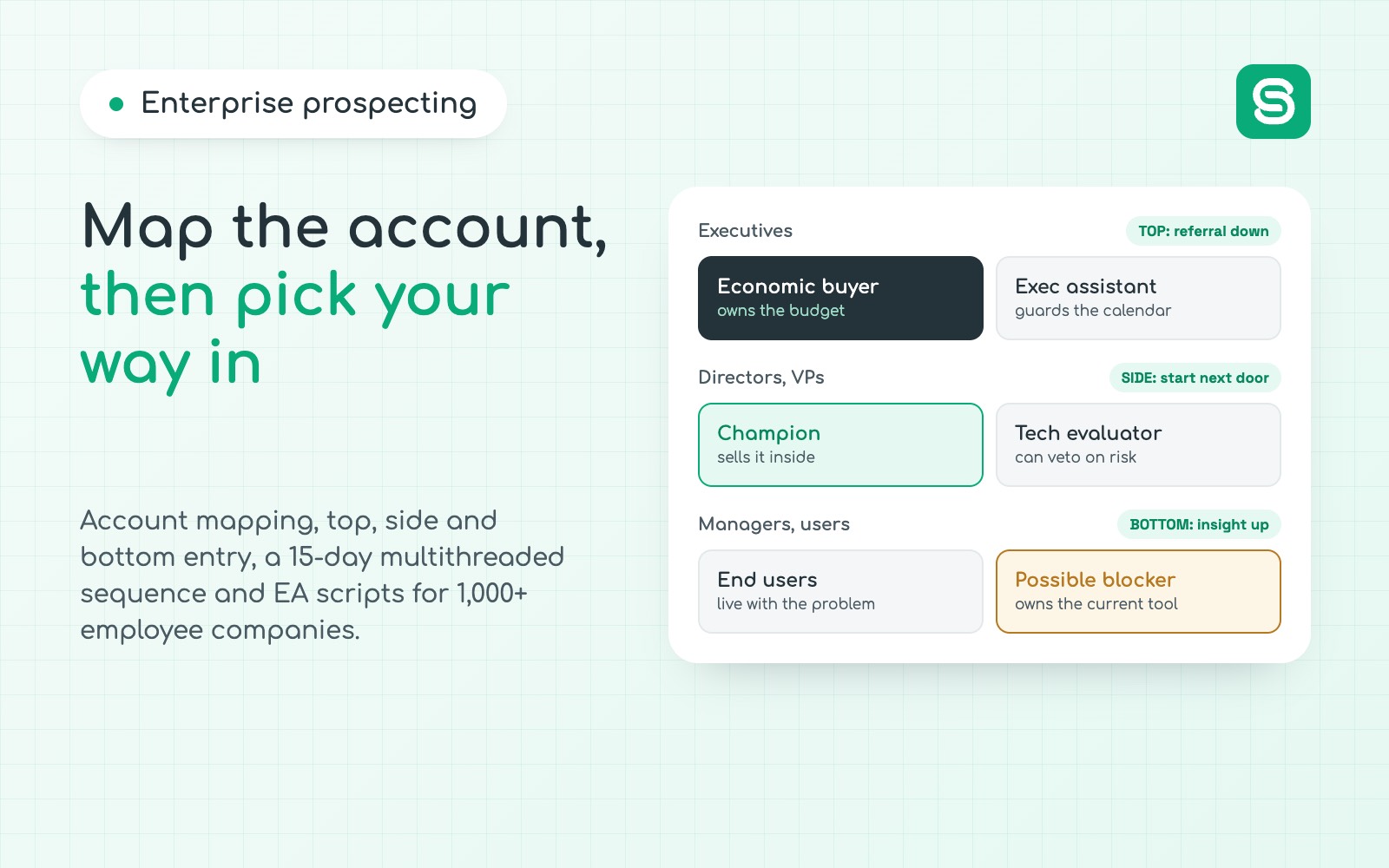
Enterprise prospecting is not cold calling with a bigger logo. A company with 1,000 or more employees has a buying group, a switchboard, executive assistants, a procurement process and a fiscal calendar, and each one changes how you open the account. This guide shows how to pick the accounts, build an account map, choose your entry point (top, side or bottom), get past the switchboard and the EA, run a 15-day multithreaded sequence, time your calls, and what it all looks like on three real-world style accounts.
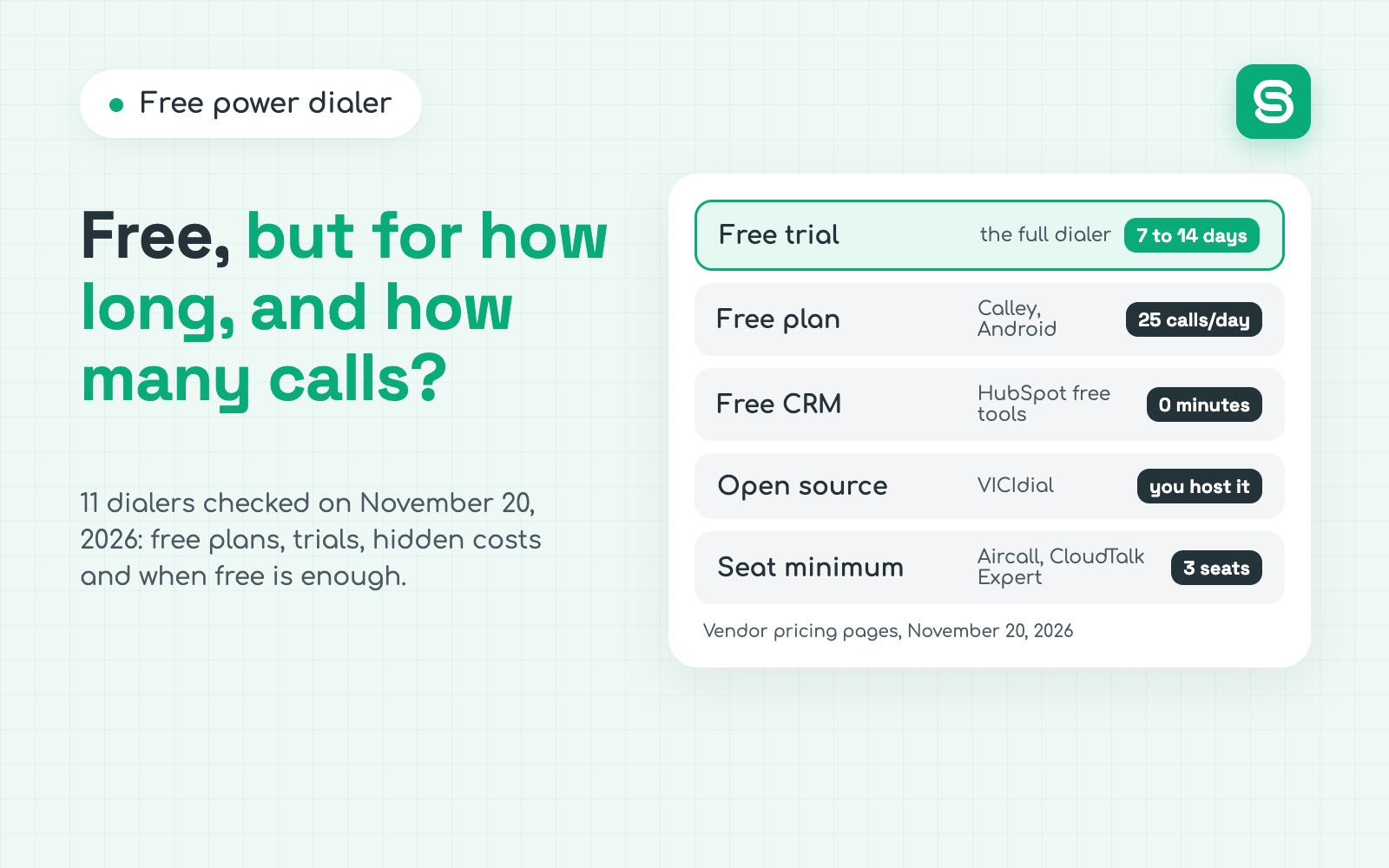
Looking for a free power dialer? We read the pricing pages of 11 dialers and calling tools on November 20, 2026. Only one has a free-forever plan that dials automatically, capped at 25 calls a day on an Android phone. Everything else is a 7 to 14 day trial, a CRM with no calling minutes, or open-source software you host yourself. Here is what each free offer really includes, the hidden costs that show up on the first invoice, a calculator for the real monthly price, a 7-day trial plan, and when free is genuinely enough.
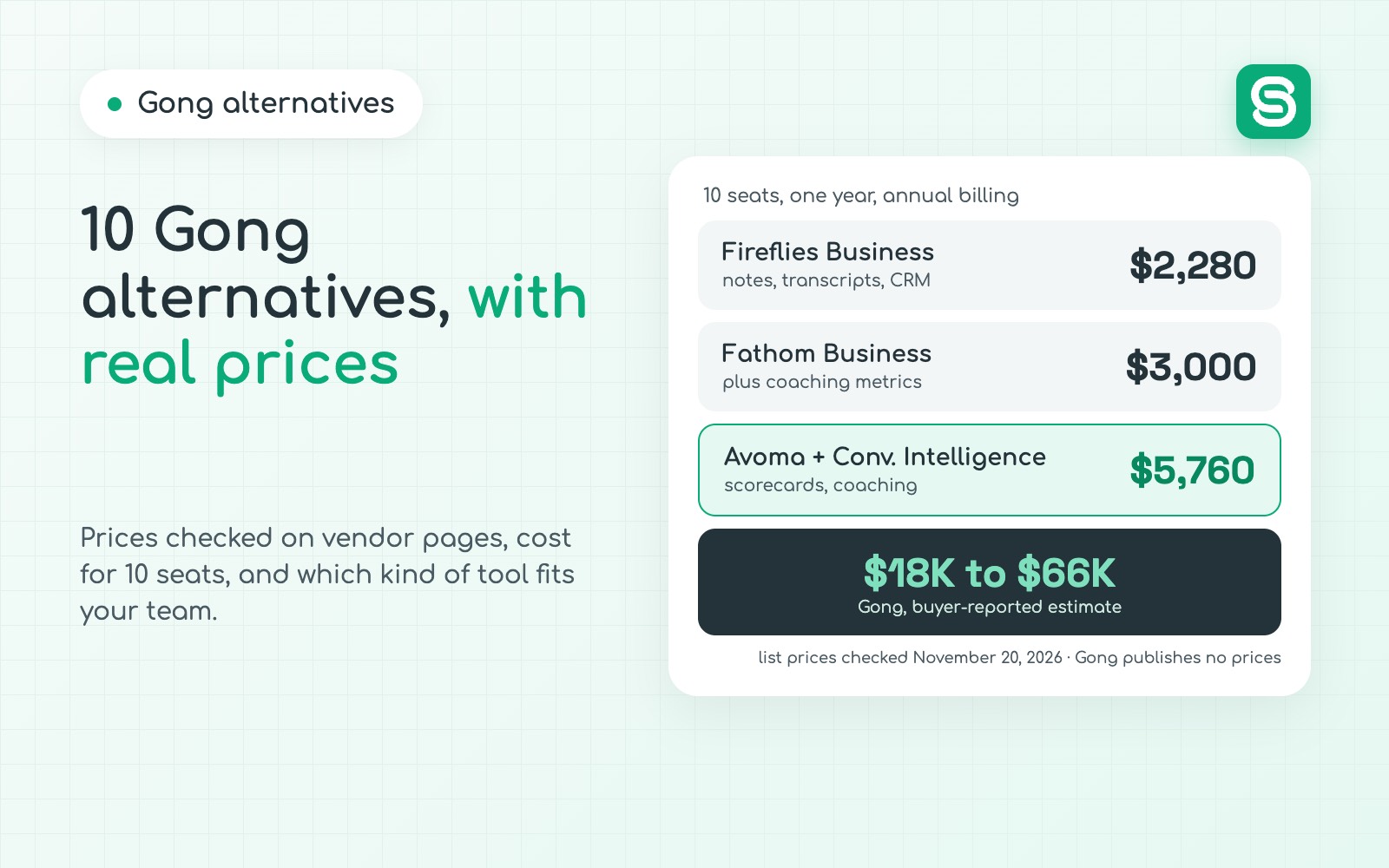
Looking for a Gong alternative because the renewal quote landed, or because you only use a fraction of the platform? This guide compares 10 Gong competitors, from Chorus, Salesloft (now with Clari) and Outreach to Avoma, Jiminny, Sybill, Fathom, Fireflies and Otter, with prices checked on each vendor's own pricing page on November 20, 2026. You'll see what Gong actually does that you'd need to replace, what 10 seats cost per year with each tool, which kind of alternative fits which team, and how to switch without losing your call library.
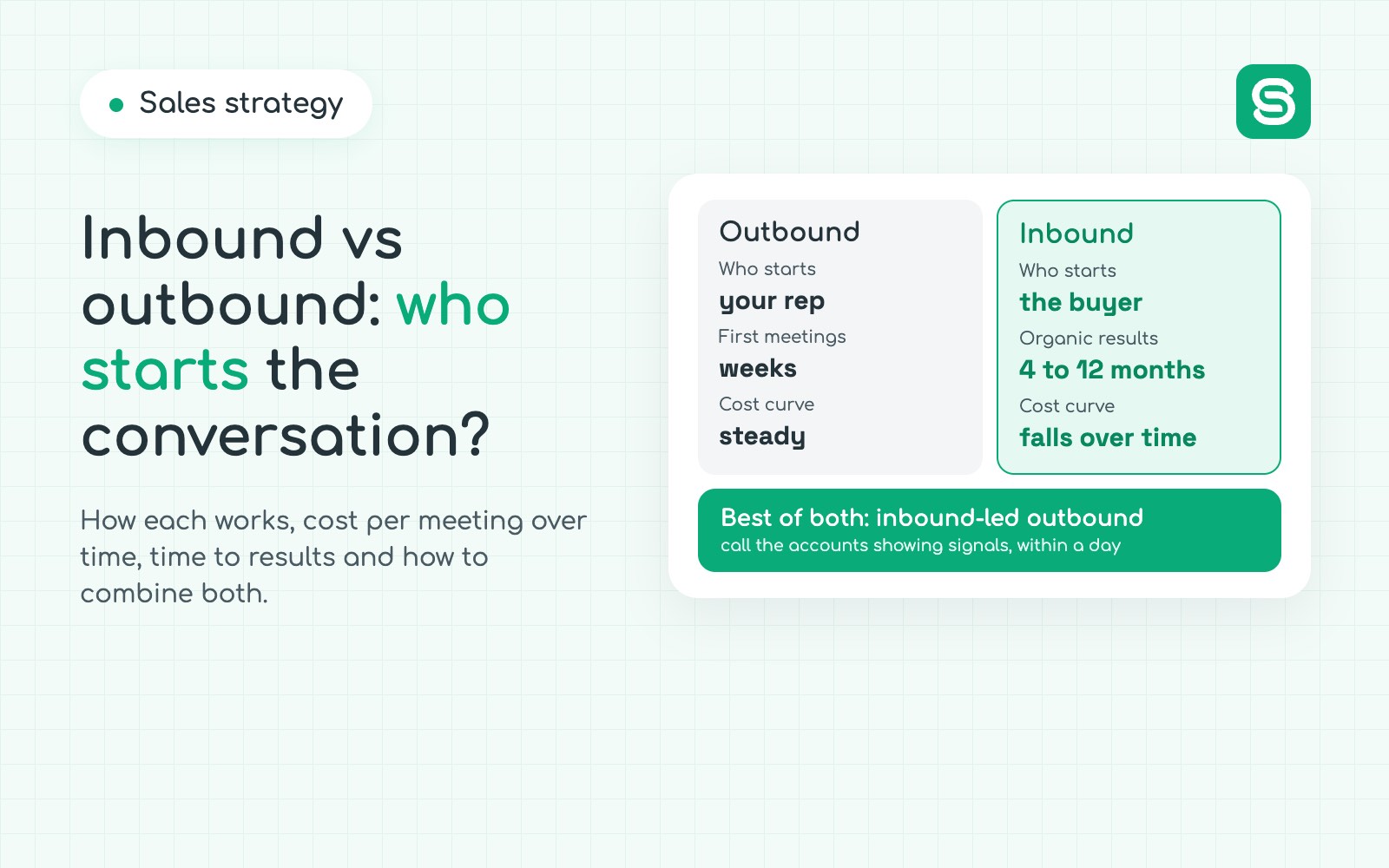
Inbound vs outbound sales is less a choice than a question of timing and math. This guide explains how each motion works, what inbound vs outbound marketing means, what a meeting really costs in each channel (with a worked example and a calculator), how long each takes to produce pipeline, which one fits your company, how to run inbound-led outbound, and how to organize SDRs and BDRs around both.
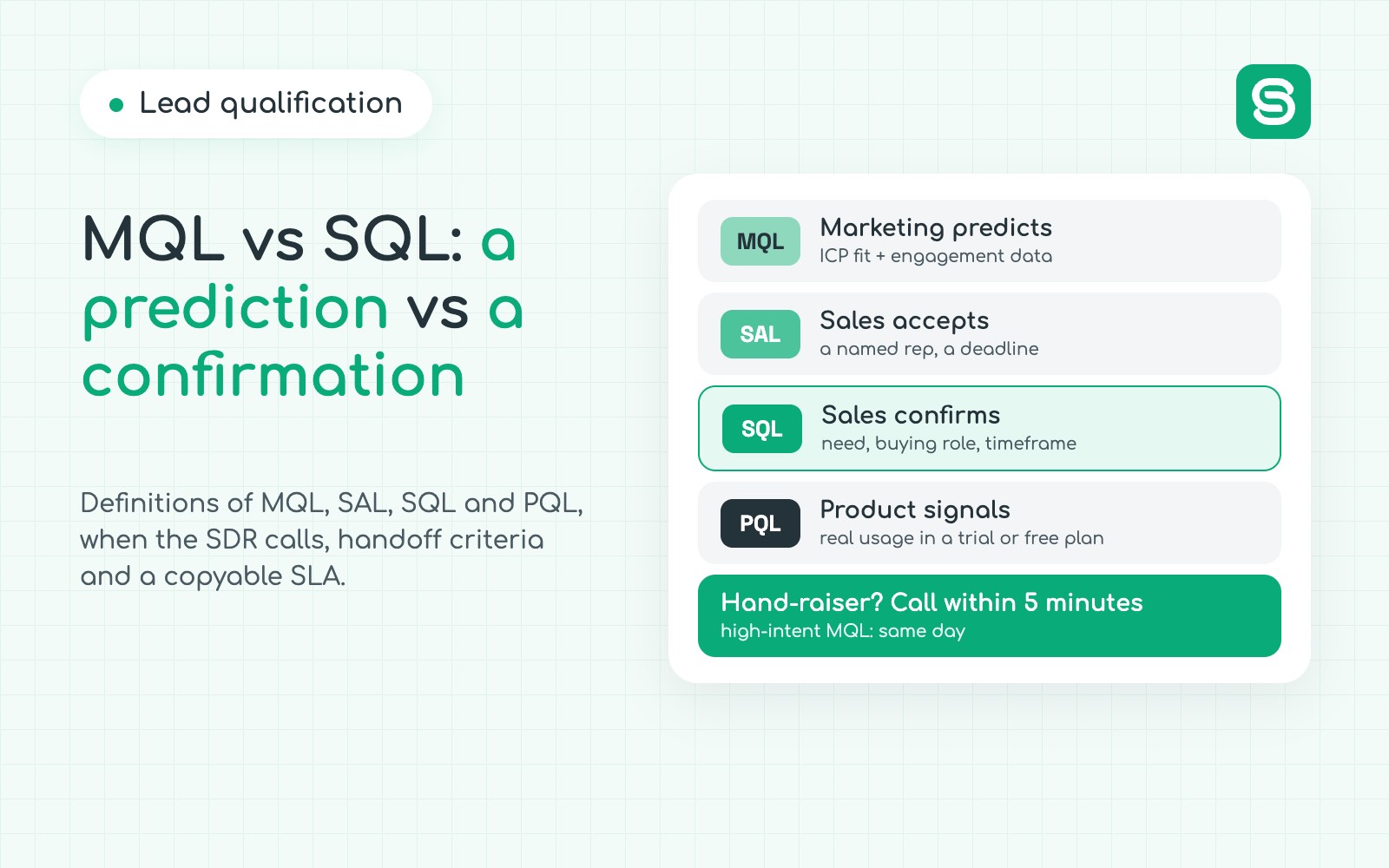
MQL vs SQL comes down to one question: who has confirmed that this lead deserves a salesperson's time, marketing's data or a live conversation? This guide gives clean definitions of MQL, SAL, SQL and PQL, the exact moment an SDR should pick up the phone, the criteria that move a lead from one stage to the next, a marketing and sales SLA you can copy, an honest look at MQL to SQL conversion rate benchmarks and a calculator that tells you what one MQL is worth.
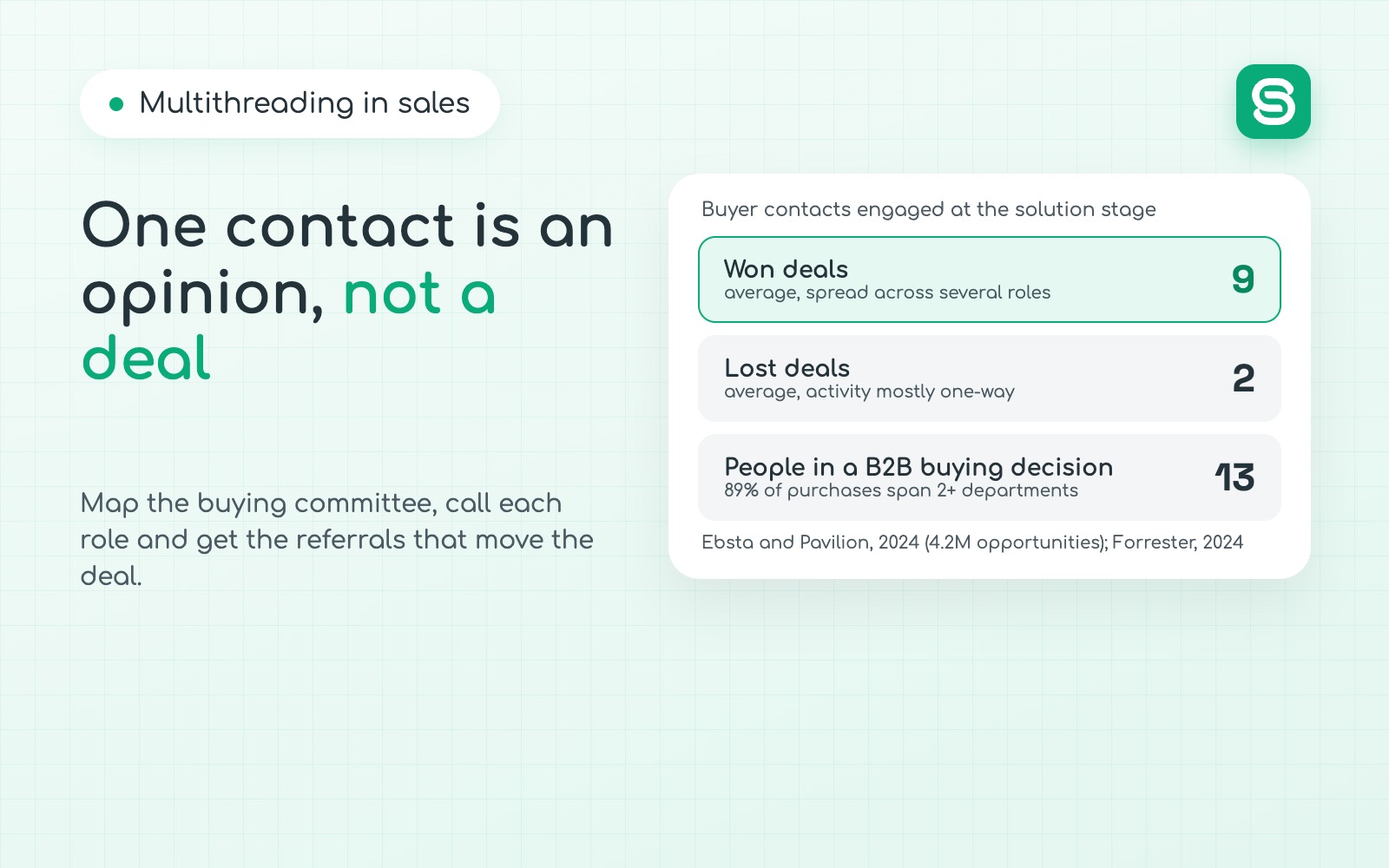
Multithreading in sales means building relationships with several people in the same account instead of betting the deal on one contact. This guide shows how big buying committees really are (Gartner, Forrester, Ebsta), how many threads a deal needs by size, how to map the committee, a three-week call sequence by role, referral scripts such as "Dana suggested I call you," what to do when your champion goes quiet, and the risks of doing it badly.
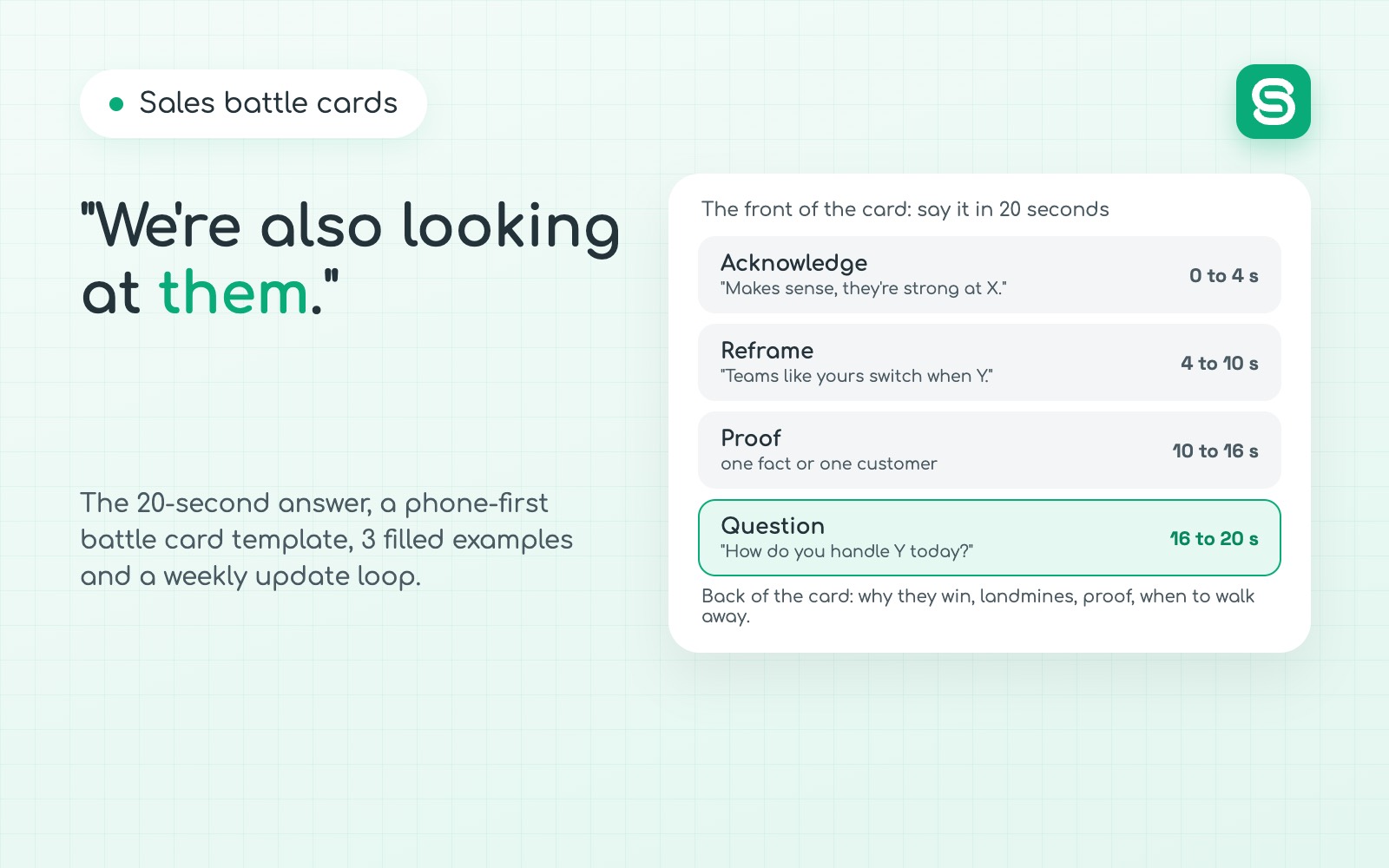
Sales battle cards are one-page guides that tell a rep how to win against a specific competitor. Most are built for a slide deck, not a live call. This guide gives you a phone-first battle card template with the 20-second answer a rep says when a prospect names a competitor, three competitive battle cards filled in for fictional competitors (the bundled incumbent, the cheap tool, the hyped newcomer), a weekly process to keep them true, and the legal lines not to cross.
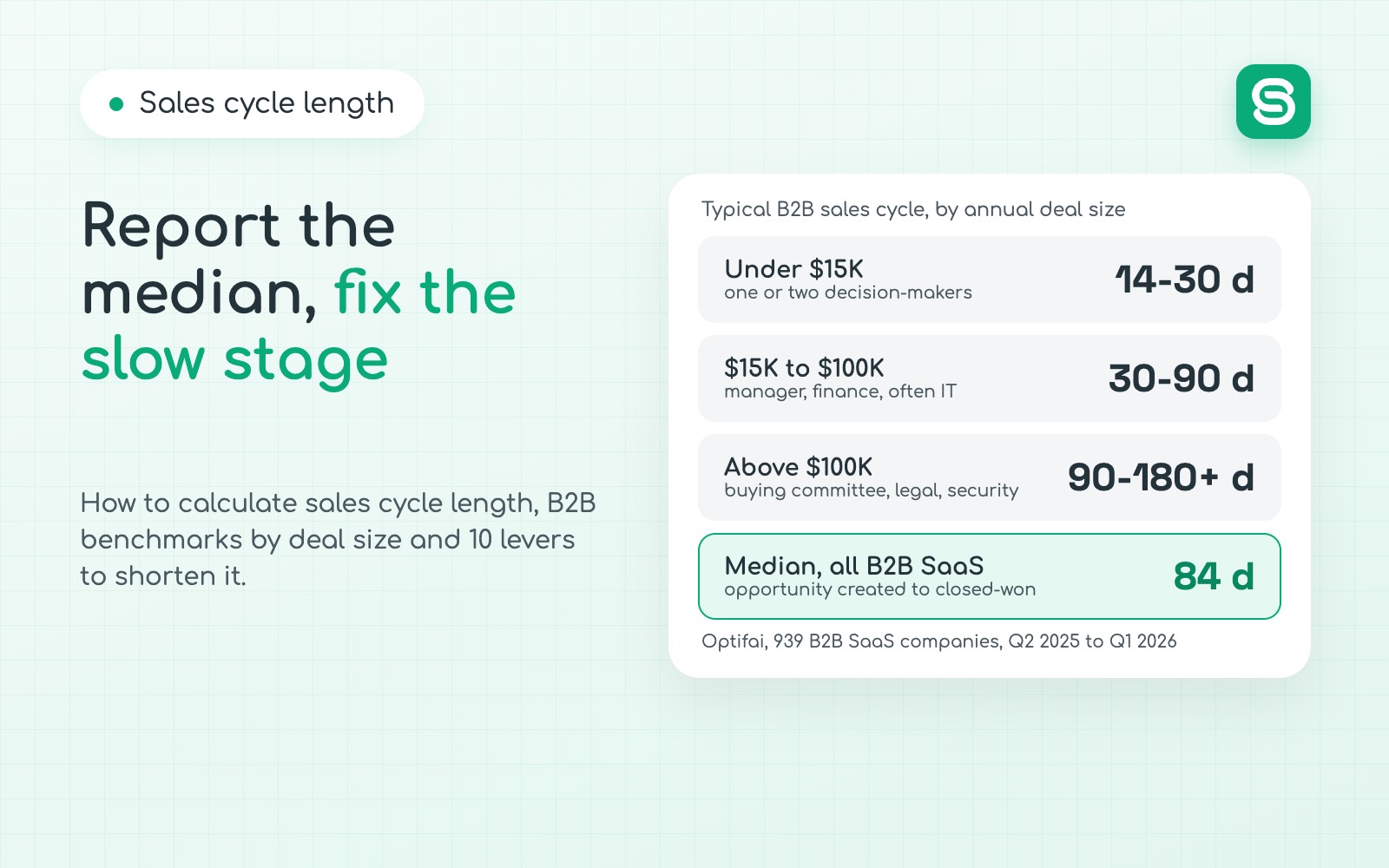
Sales cycle length is the number of days it takes to turn an opportunity into a signed customer. This guide shows how to calculate it without fooling yourself (median vs. mean, won deals only, cohorts, time in stage), what the 2024 to 2026 benchmarks actually say by deal size and sector, where deals lose their time, and ten levers that shorten the cycle without discounting. With a free calculator and a mutual action plan template to copy.
Skipcall uses cookies to measure site traffic, track its advertising campaigns and offer live chat.
Learn more
These tools are active as soon as you arrive, unless you decline them. You can reject all or choose purpose by purpose; a refusal takes effect immediately. Consent is kept for six months; after a refusal, you will be asked again on your next visit. You can change your mind at any time via "Manage cookies" at the bottom of every page.





 By Charles Baldet 23 min read