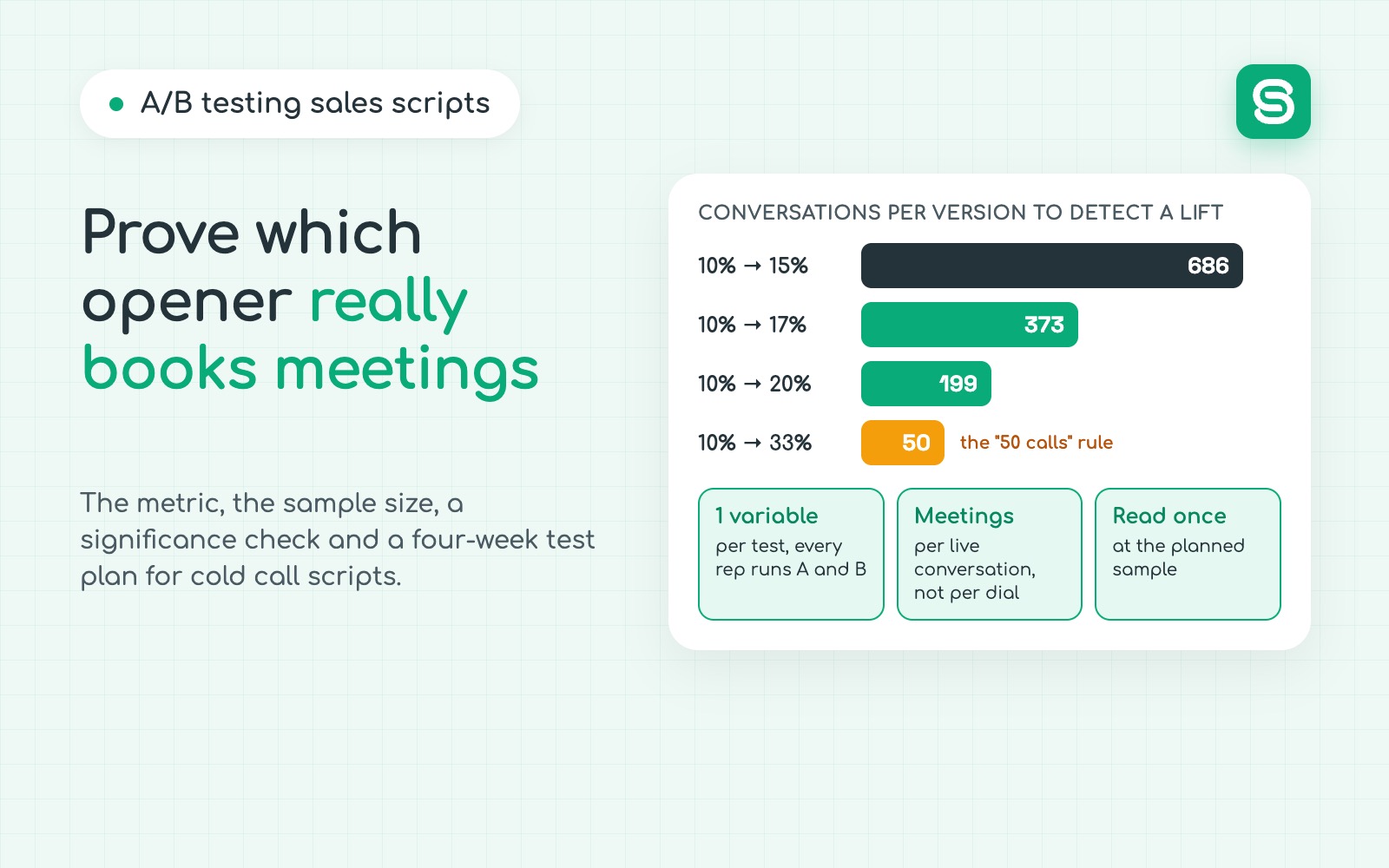
A/B testing sales scripts sounds simple: try two openers, keep the one that books more meetings. In practice most script tests are too small to prove anything, mix several changes, and get stopped the day one version pulls ahead. This guide gives you a statistically honest method in plain English: the one metric to judge a script on, how many live conversations you really need, a significance checker you can use right now, a four-week test plan and twelve hypotheses worth testing first.
An AI call summary turns a sales call into notes, next steps and CRM fields. Learn what a good one contains, how to check it fast, and which tools fit.
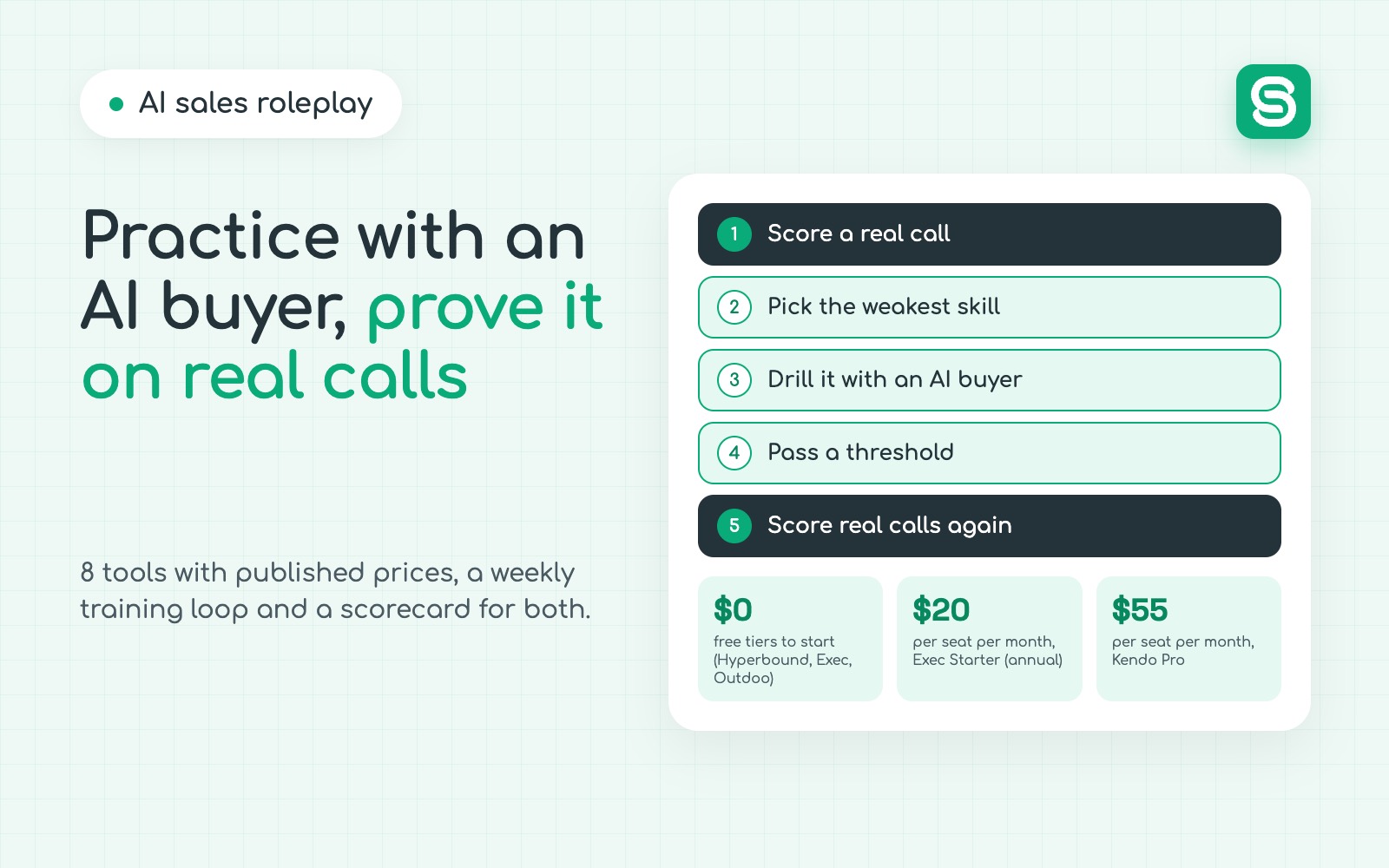
AI sales roleplay lets reps practice cold calls, objections and discovery against a simulated buyer that talks back, any time, without tying up a manager. This guide explains how it works, compares eight AI roleplay tools with the prices published on their own sites, shows how to build a weekly practice program that actually shows up on real calls, gives you a scorecard to grade both, and spells out the limits vendors don't put on their homepage.
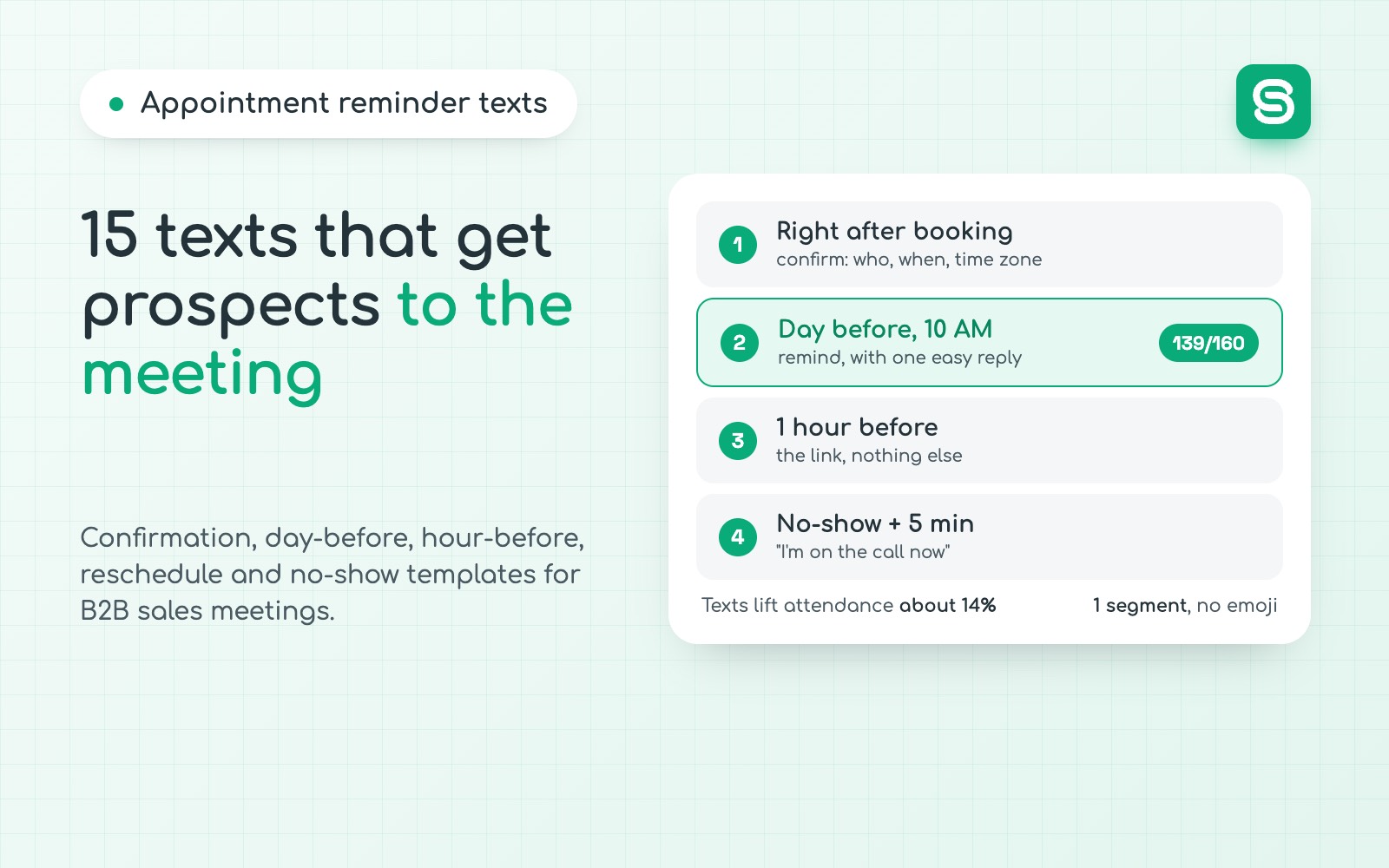
Fifteen appointment reminder text templates written for B2B sales meetings, not dentist appointments: confirmation right after booking, day-before and hour-before reminders, reschedule texts and no-show follow-ups, each one ready to copy and sized to fit a single SMS segment. You also get the timing that works, what the research on reminders actually shows, the TCPA and 10DLC rules that apply to texting prospects in the US, and a calculator to put a dollar figure on your no-shows.
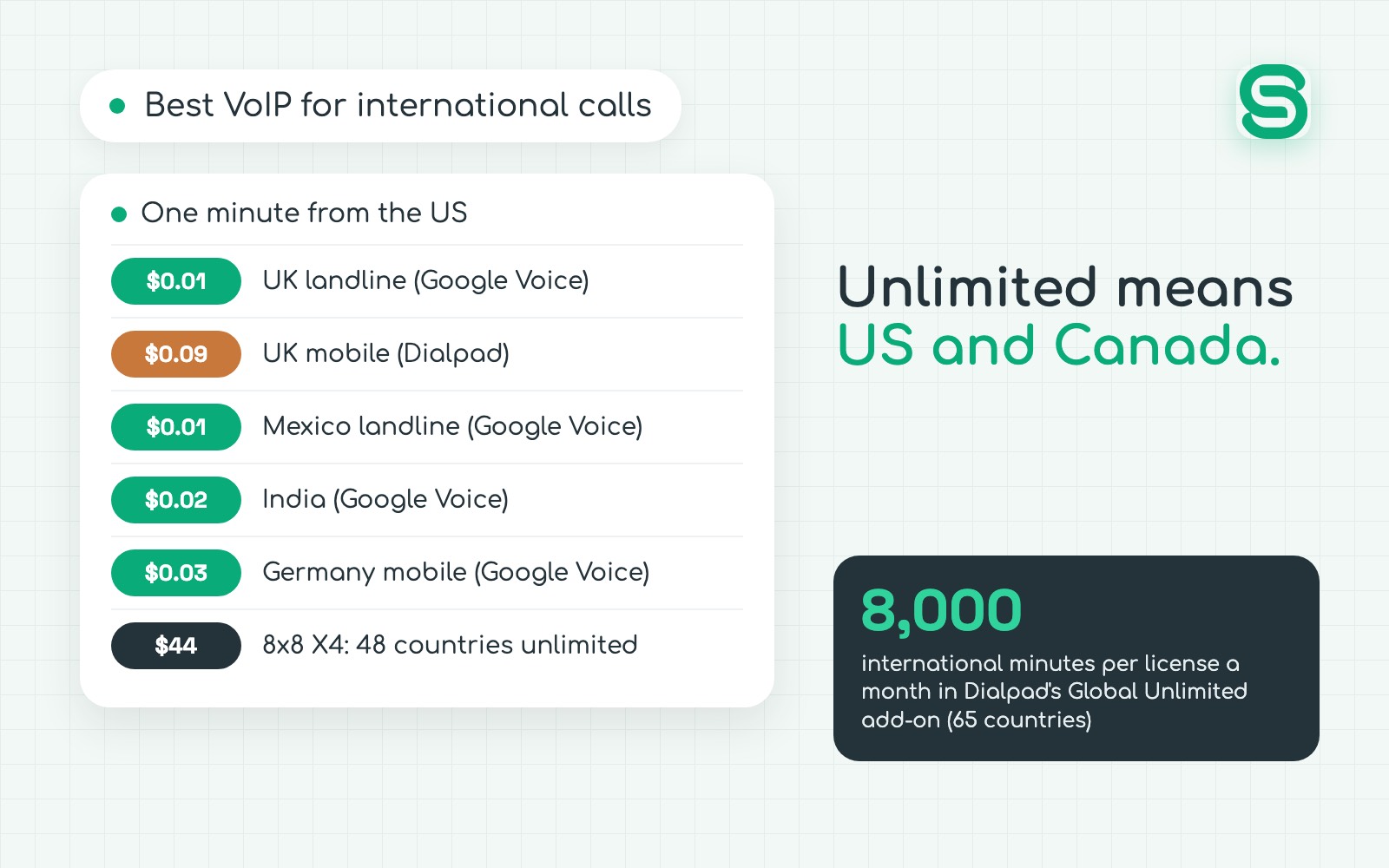
The best VoIP for international calls depends on three things: the countries you call, whether you reach landlines or mobiles, and whether people abroad need to call you back. We read the pricing pages and rate tables of RingCentral, Dialpad, Nextiva, Zoom Phone, 8x8, Quo and Google Voice on November 20, 2026, and compared the price of a minute to the UK, Mexico, India and Germany, the country bundles, the cost of a local number abroad and the traps hidden behind the word unlimited.
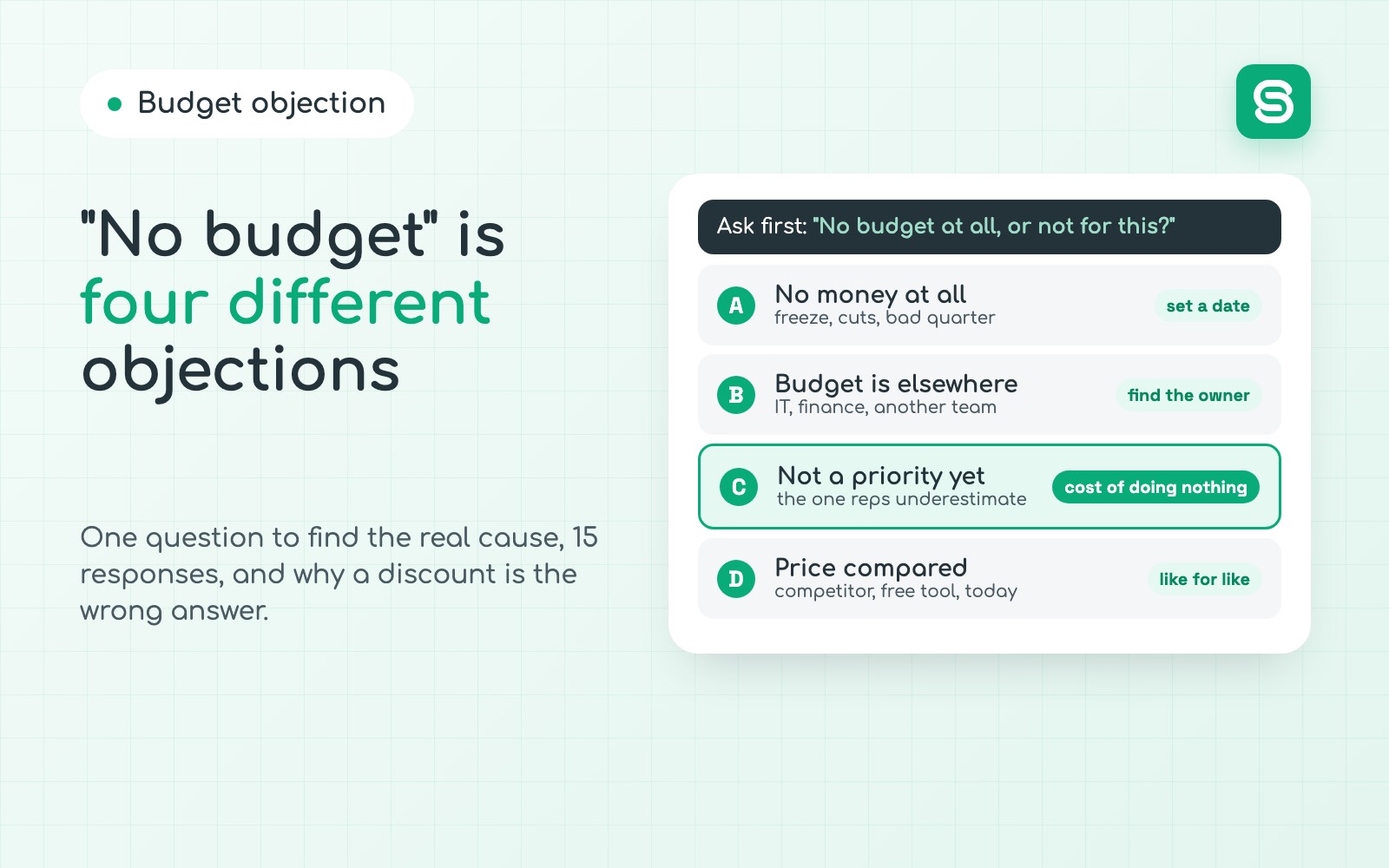
"We don't have the budget" is one sentence that hides four different problems: no money at all, money that sits in another department, a problem that isn't a priority yet, or a price compared with something cheaper. This guide gives you the ten-second question that tells them apart, 15 word-for-word responses sorted by cause, how to handle "it's too expensive," why an instant discount costs far more than it looks, and a mini ROI calculator to run with the prospect.
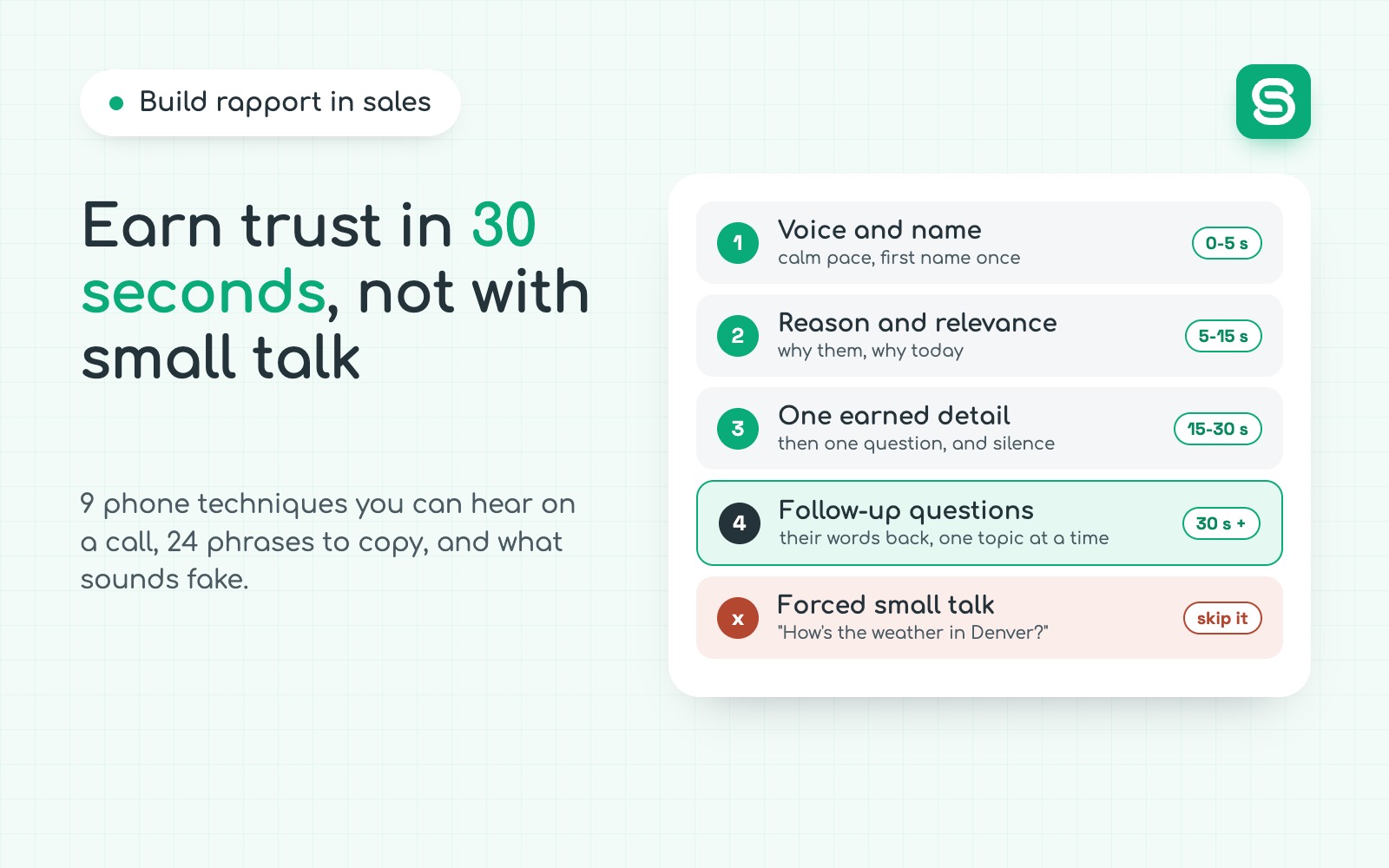
How to build rapport in sales when the buyer can't see you and didn't ask for your call. This guide covers what rapport means in B2B, why the usual advice (small talk, mirroring body language, compliments) falls flat on the phone, what the research actually shows, the first 30 seconds of a call second by second, nine techniques a manager can hear on a recording, 24 rapport phrases and questions to copy, and a scorecard to review your own calls.
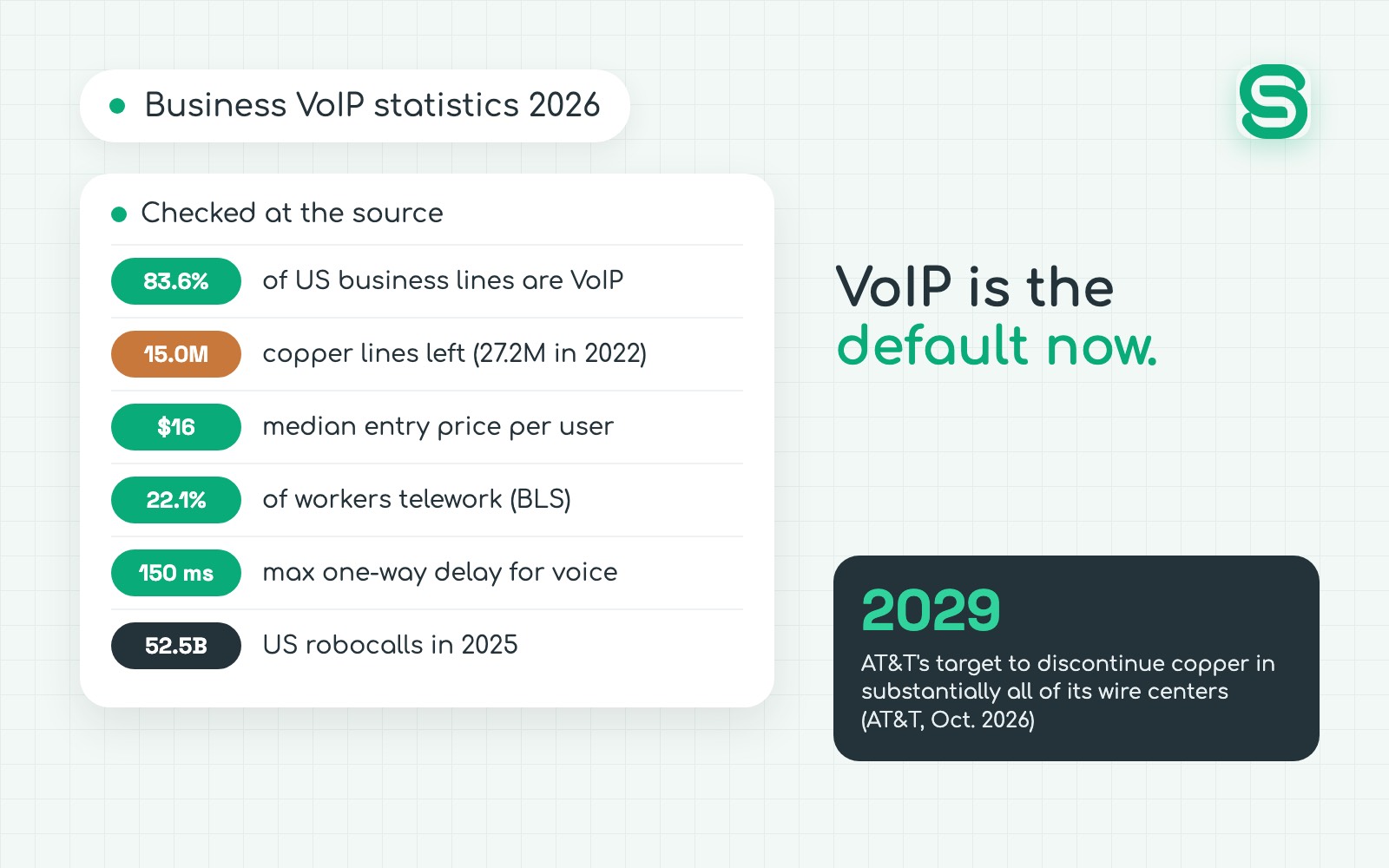
Business VoIP statistics for 2026, grouped by the question you are trying to answer: how many US business lines already run on VoIP, how fast copper is disappearing, what a cloud phone costs per user, how hybrid work changed calling, what call quality targets to hit and how many robocalls the network carries. Every figure links to its primary source (FCC, BLS, Census, FTC, carriers and vendors quoted as such), with its date. The popular numbers we could not trace are listed separately.
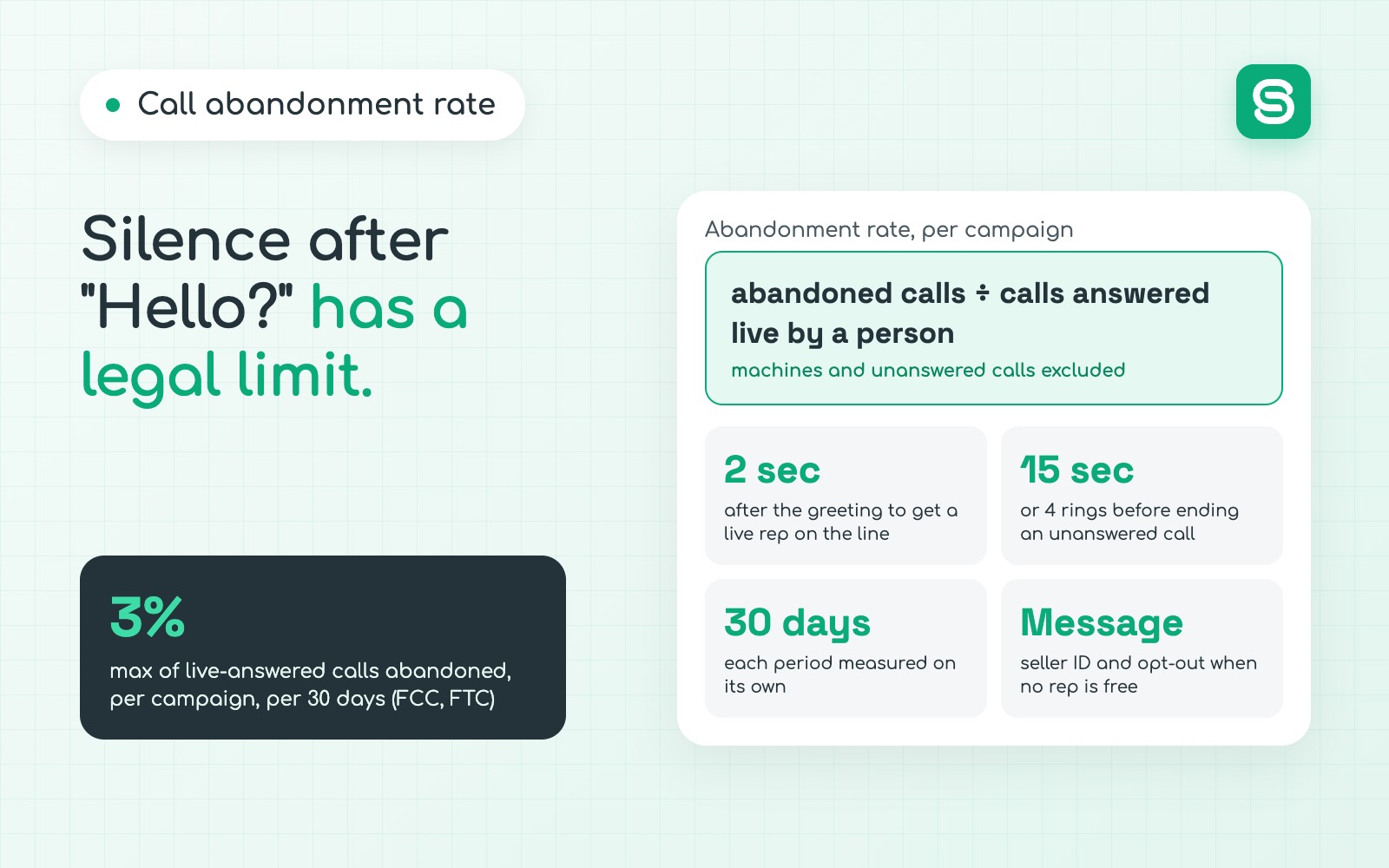
In outbound calling, call abandonment rate is a legal number, not just a KPI. US rules from the FCC and the FTC call a telemarketing call abandoned when no live rep is on the line within two seconds of the person's greeting, and cap abandoned calls at 3% of live answers, per campaign, per 30 days. This guide quotes the texts, shows how to calculate the rate (with a calculator), lists the safe harbor conditions, explains why predictive dialers abandon calls and power dialers don't create that situation, covers the FCC's question about scrapping the rule and how the UK's Ofcom treats abandoned calls, and gives you a plan to stay under the cap.
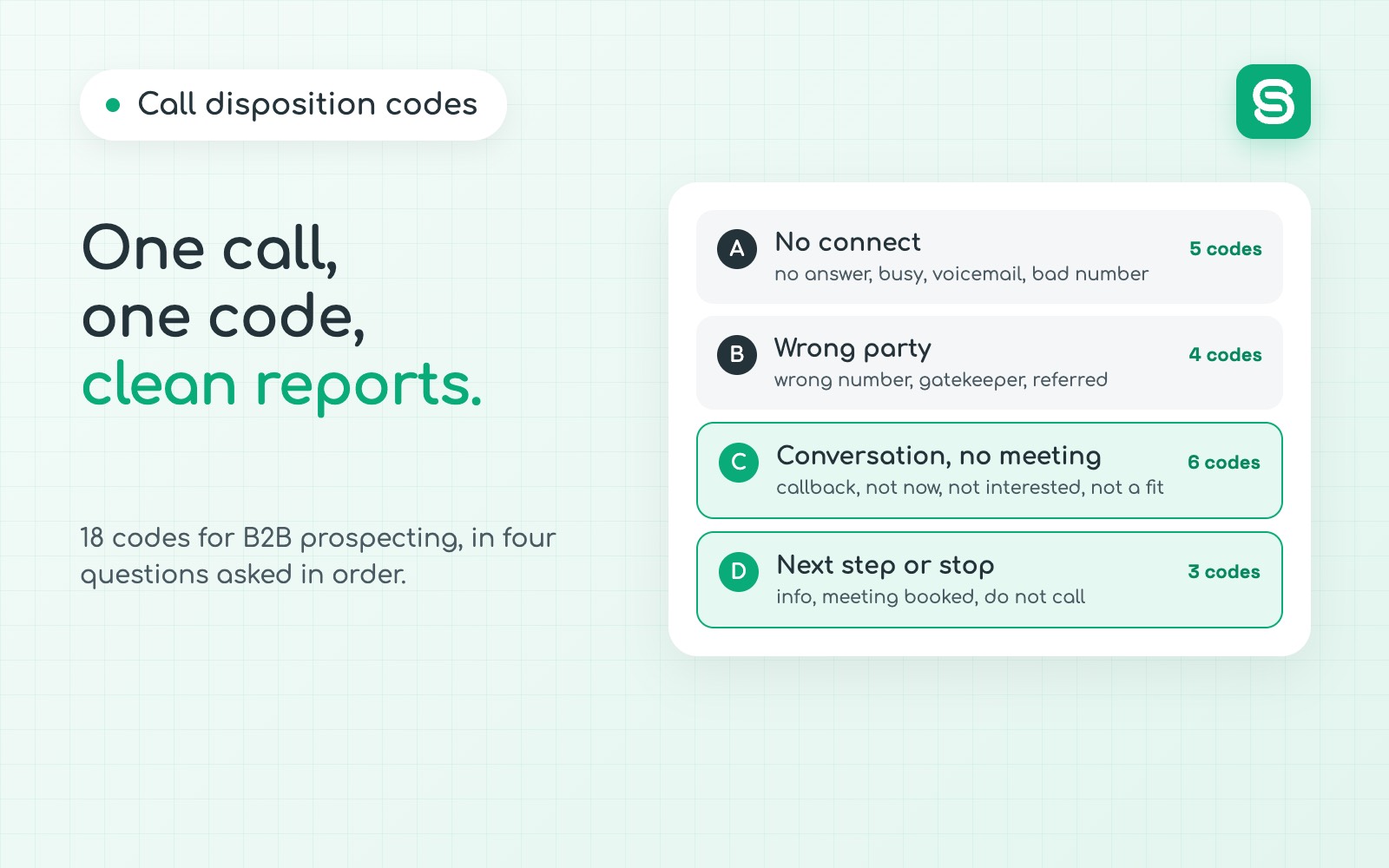
Call disposition codes are the labels a rep picks after every dial: no answer, voicemail, gatekeeper, not interested, meeting booked. Pick the wrong list and your dashboards lie. This guide gives you a ready-to-copy list of 18 codes for B2B prospecting, grouped in four families, with a definition, a next action and the metric each one feeds. You also get the decision path that stops reps from guessing, six tricky call examples, how many codes to keep by team size, a rollout plan for HubSpot, Salesforce or any dialer, and the mistakes that quietly ruin call data.
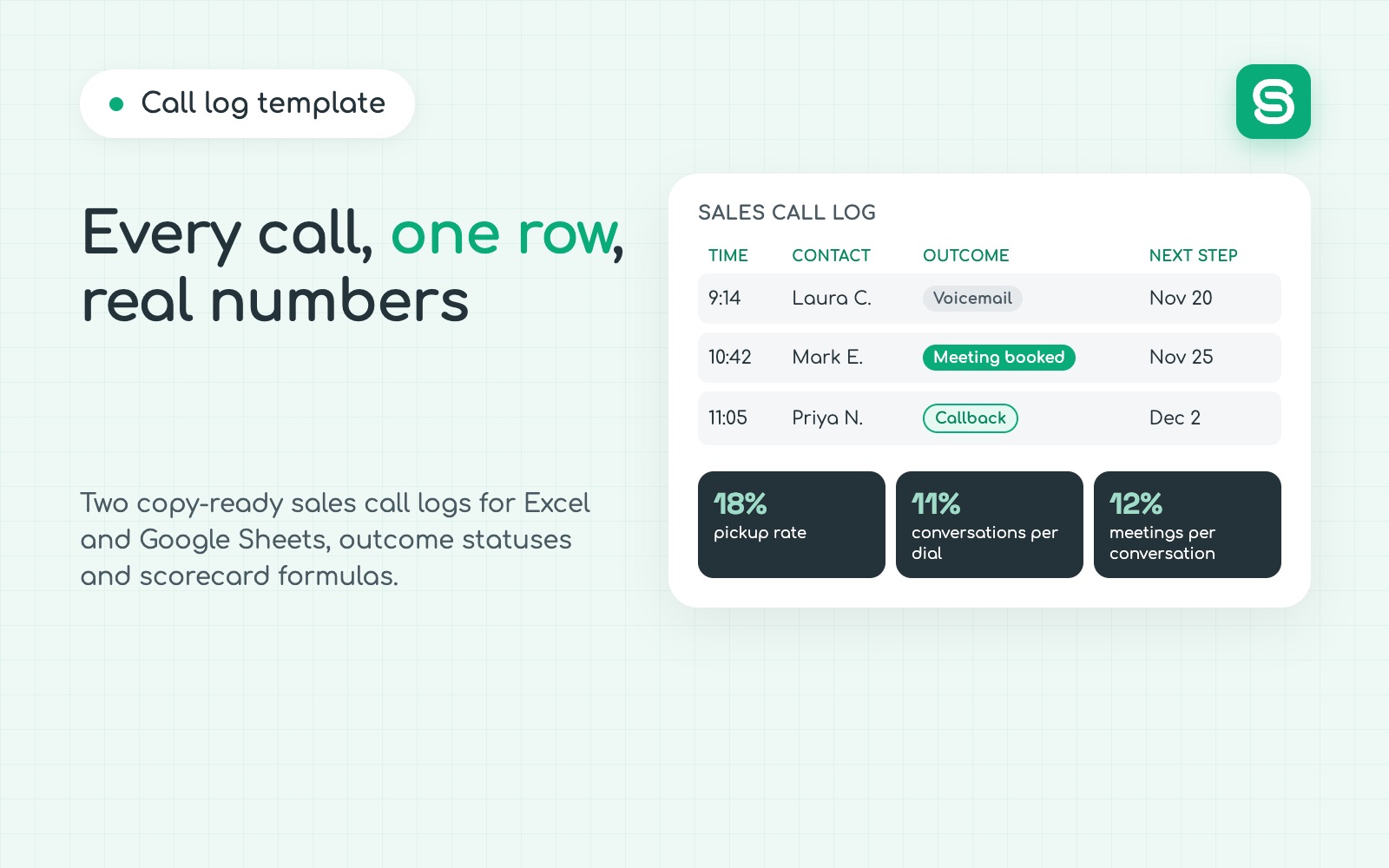
A call log template gives every sales call one row: when, who, what happened and what comes next. This guide gives you two copy-ready templates (a simple log for a solo rep and a manager version for a team), the outcome statuses to use, the formulas that turn the log into a weekly scorecard, the hygiene rules that keep it accurate, and the signs it's time to stop logging calls by hand.
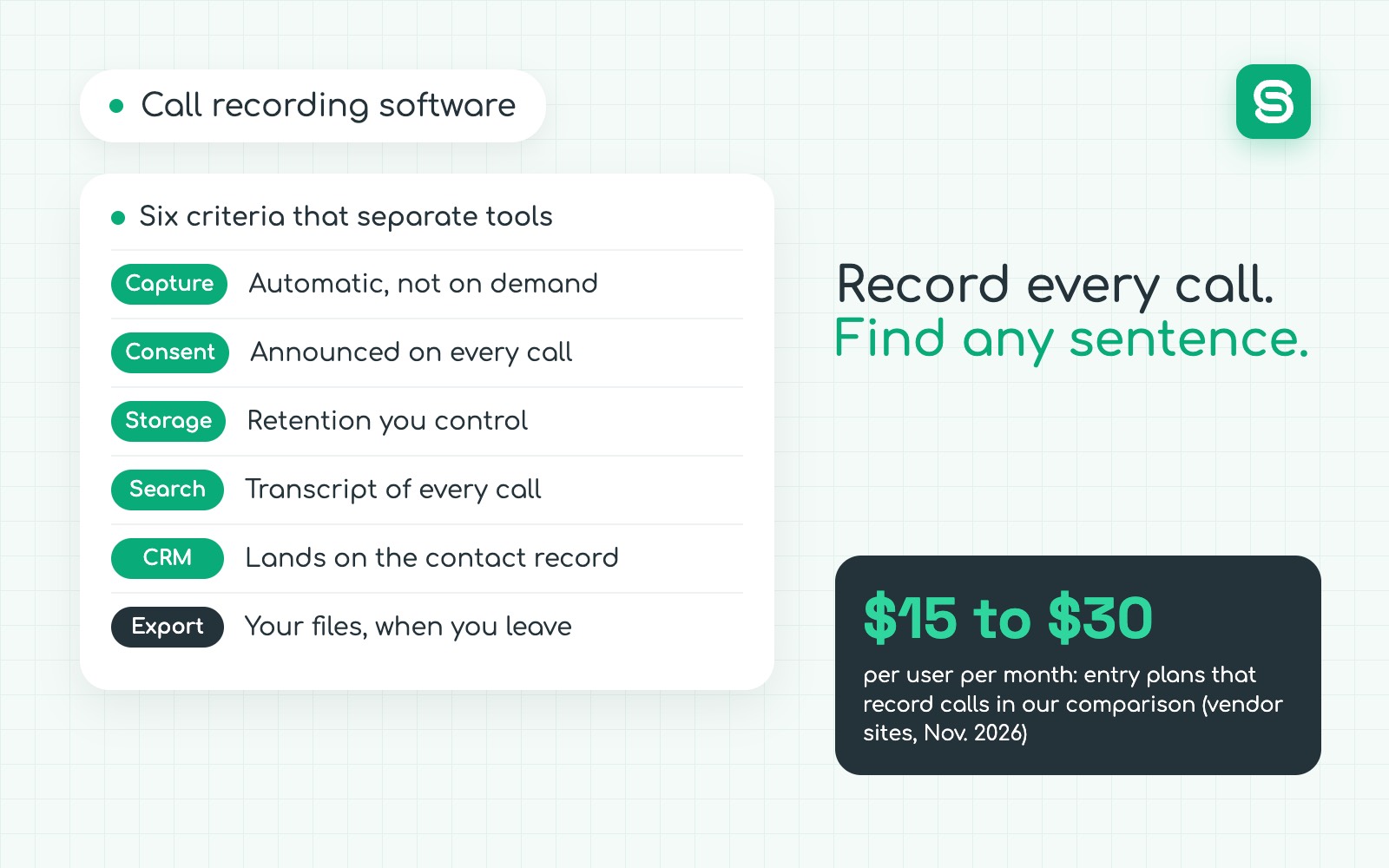
Call recording software captures your sales calls so you can coach, settle disputes and keep a memory of every account. Nearly every business phone system now records, so the real differences are elsewhere: automatic or on-demand capture, consent handling across states, where the audio is stored and for how long, whether you can search it, whether it lands in your CRM, and whether you can take it with you when you leave. This guide compares 10 tools on those points with prices checked on vendor sites in November 2026, separates recording from transcription, and gives you a vendor checklist and a calculator to size your volume.
Skipcall uses cookies to measure site traffic, track its advertising campaigns and offer live chat.
Learn more
These tools are active as soon as you arrive, unless you decline them. You can reject all or choose purpose by purpose; a refusal takes effect immediately. Consent is kept for six months; after a refusal, you will be asked again on your next visit. You can change your mind at any time via "Manage cookies" at the bottom of every page.







 By Charles Baldet 28 min read