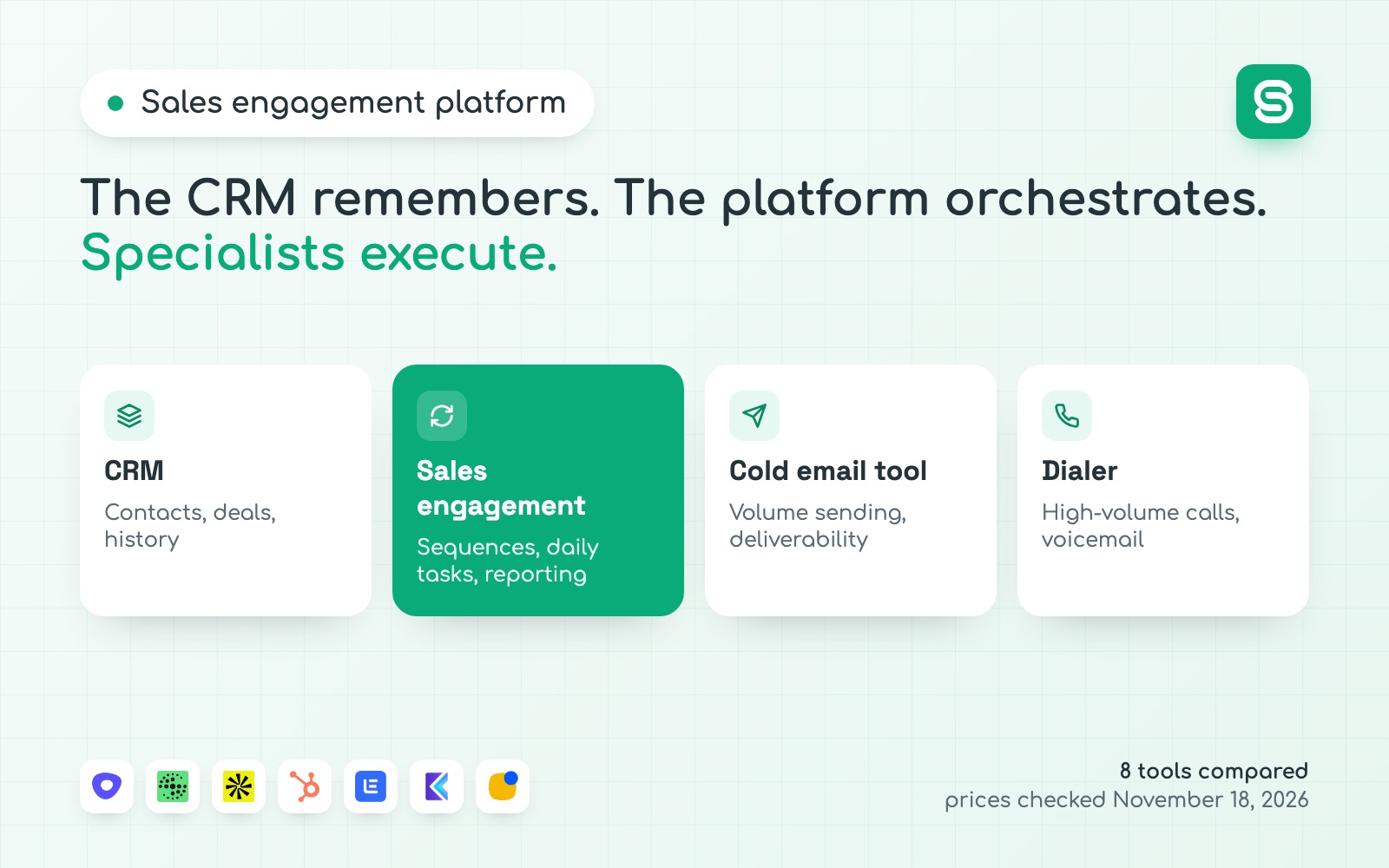
A sales engagement platform runs the daily outbound work of your reps: multichannel sequences, a daily task queue, email sends, calls, and reporting on what works. This guide explains what it does and doesn't do compared with a CRM, a dialer and a cold email tool, compares eight tools with list prices checked on November 18, 2026, and gives you a decision tree, a 12-month cost model and the questions to ask on the demo call.
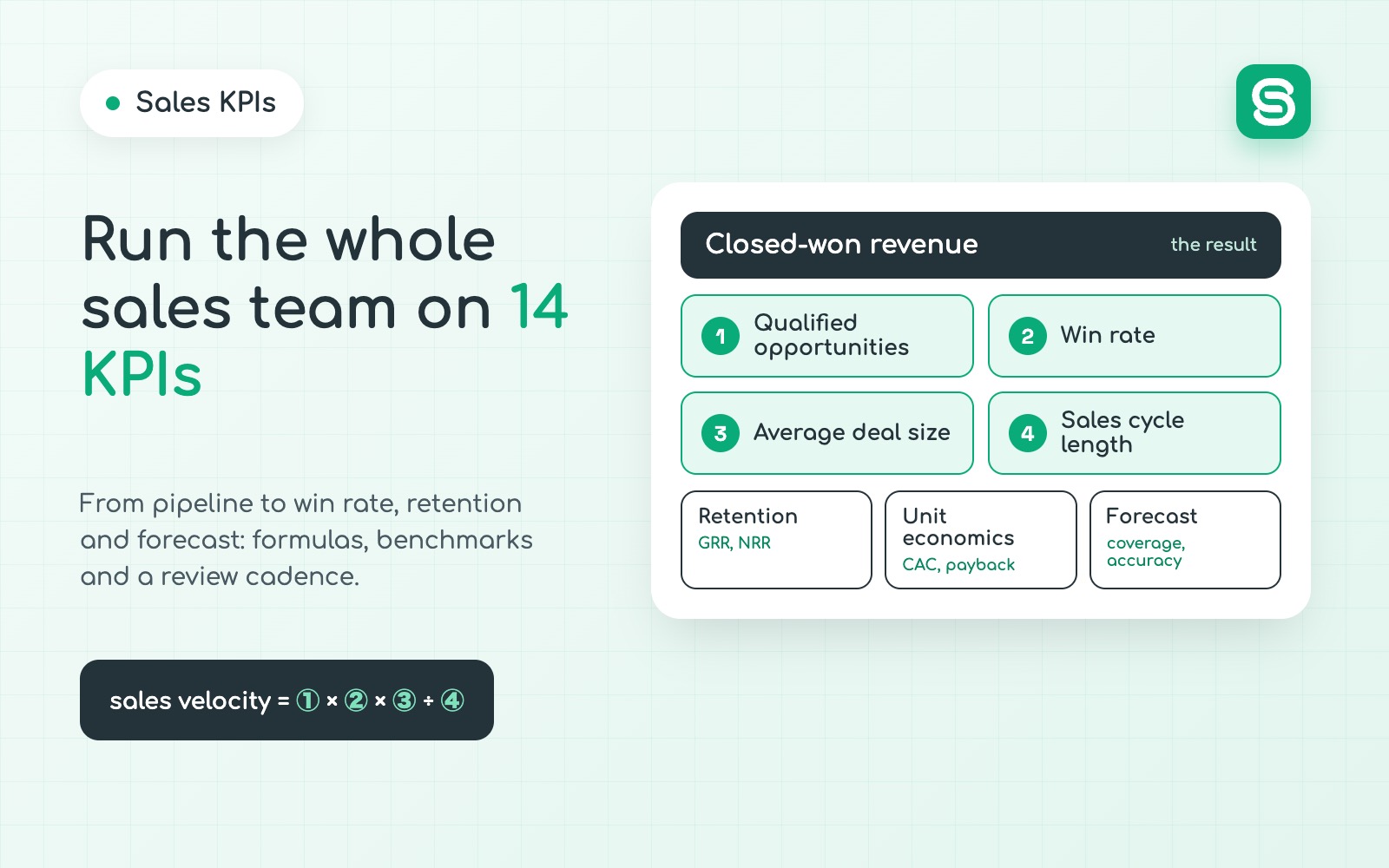
Which sales KPIs should you track to run an entire sales team, not just its dials? This guide starts from revenue and works back to the levers: qualified opportunities, win rate, average deal size, sales cycle length, sales velocity, retention, CAC and forecast accuracy. For each one: the exact formula, the calculation trap, the benchmarks published by Ebsta, Bridge Group, Salesforce, Gartner and SaaS Capital, and the decision it should trigger. Plus a one-page dashboard, a review cadence and a 30-day rollout plan.
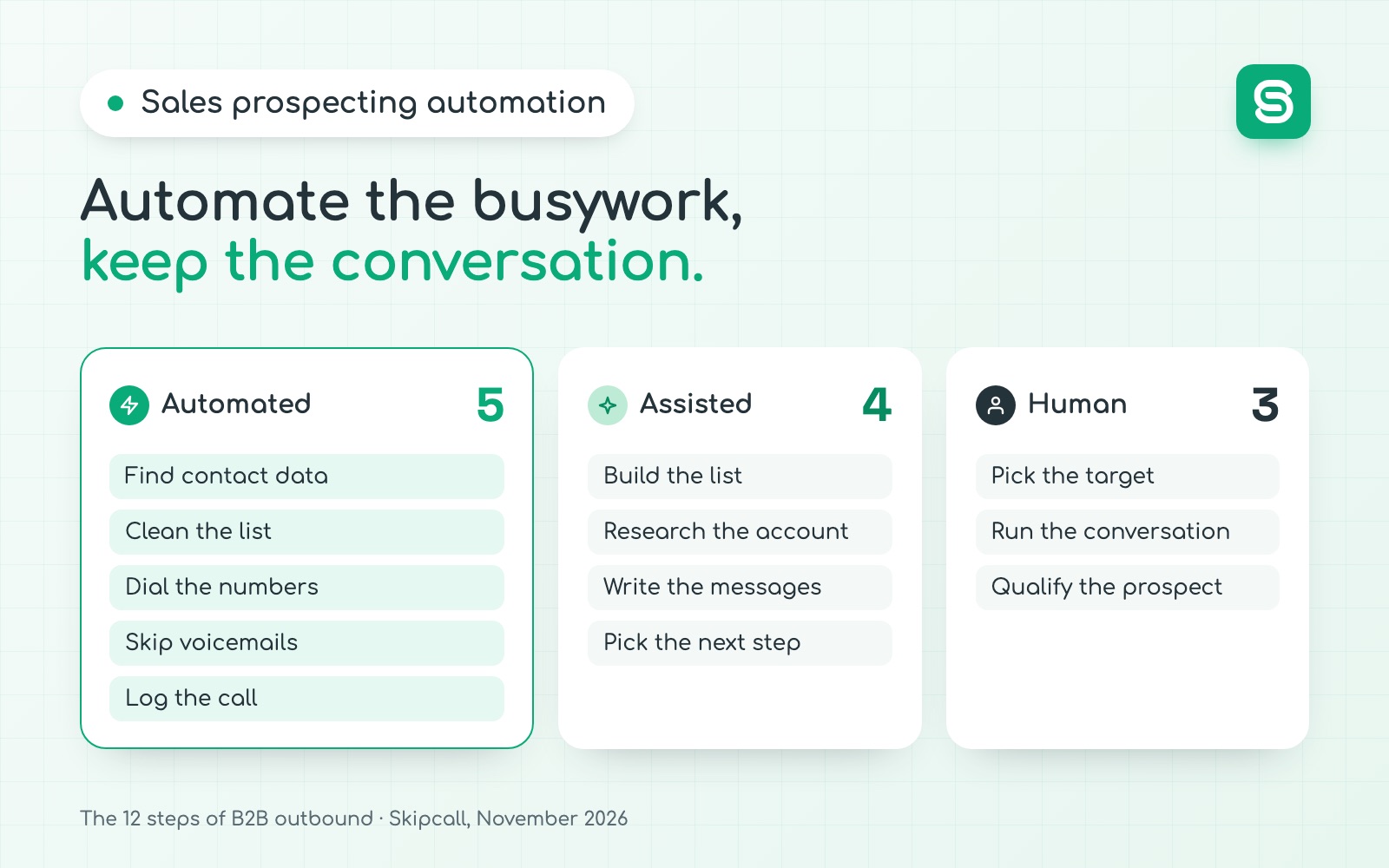
Automating prospecting doesn't mean handing it to a robot. Of the 12 steps in a B2B outbound motion, five automate well, four work best with a tool assisting a rep, and three stay human. This guide walks through each one: what the software does, what the rep keeps, the order to automate in, the if/then rules worth copying, what TCPA and CAN-SPAM allow, and the metrics that tell you whether automation is paying off.
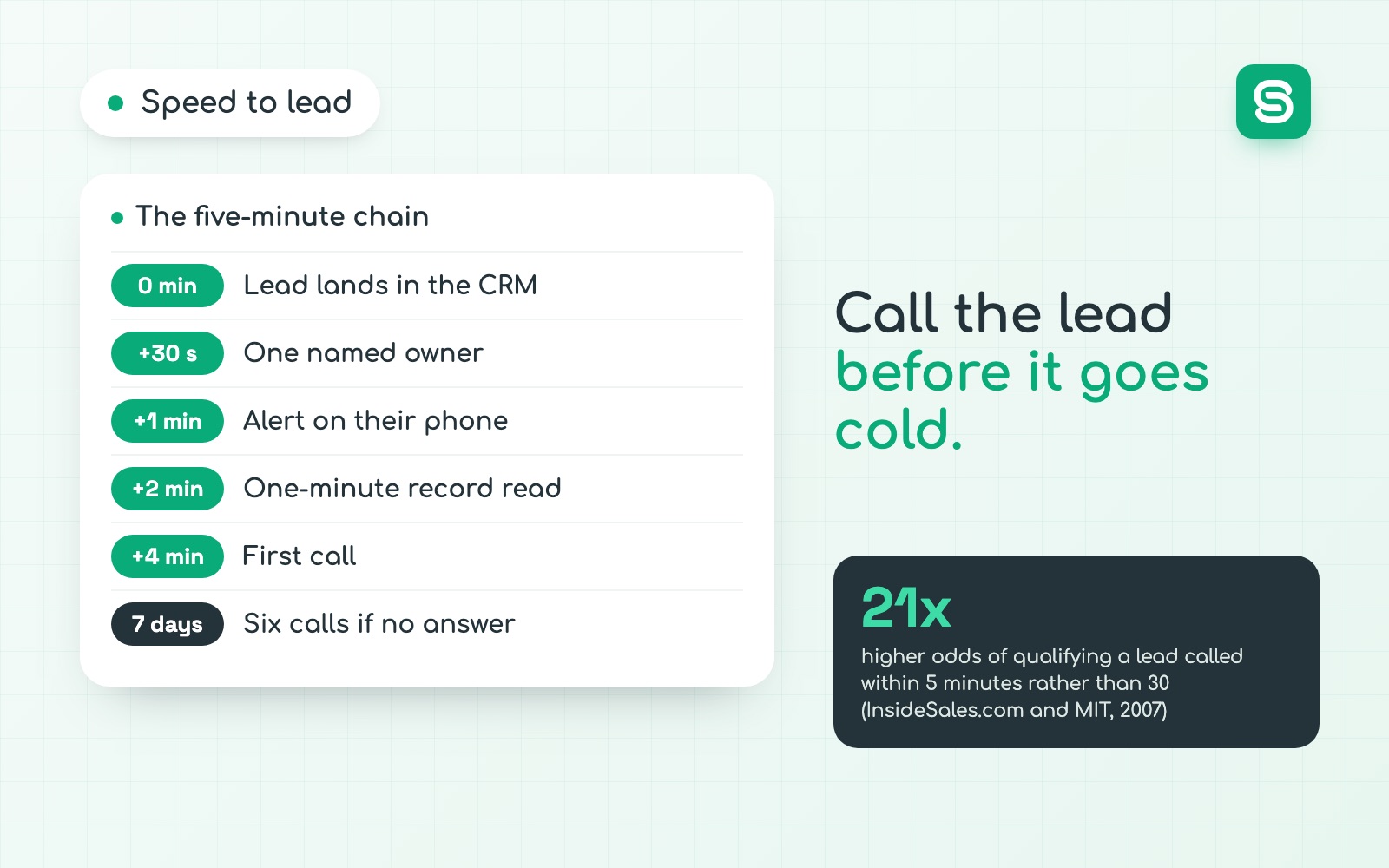
A buyer who fills out your demo form is available right now, not tomorrow. This guide goes back to the original lead response time studies (exact numbers, dates and caveats), shows where the minutes leak between the form and the first call, and lays out the operating model that holds five minutes: routing, alerts, coverage across time zones, follow-up, TCPA-aware texting and CRM measurement, with a callback policy and a mystery-shop test you can copy.
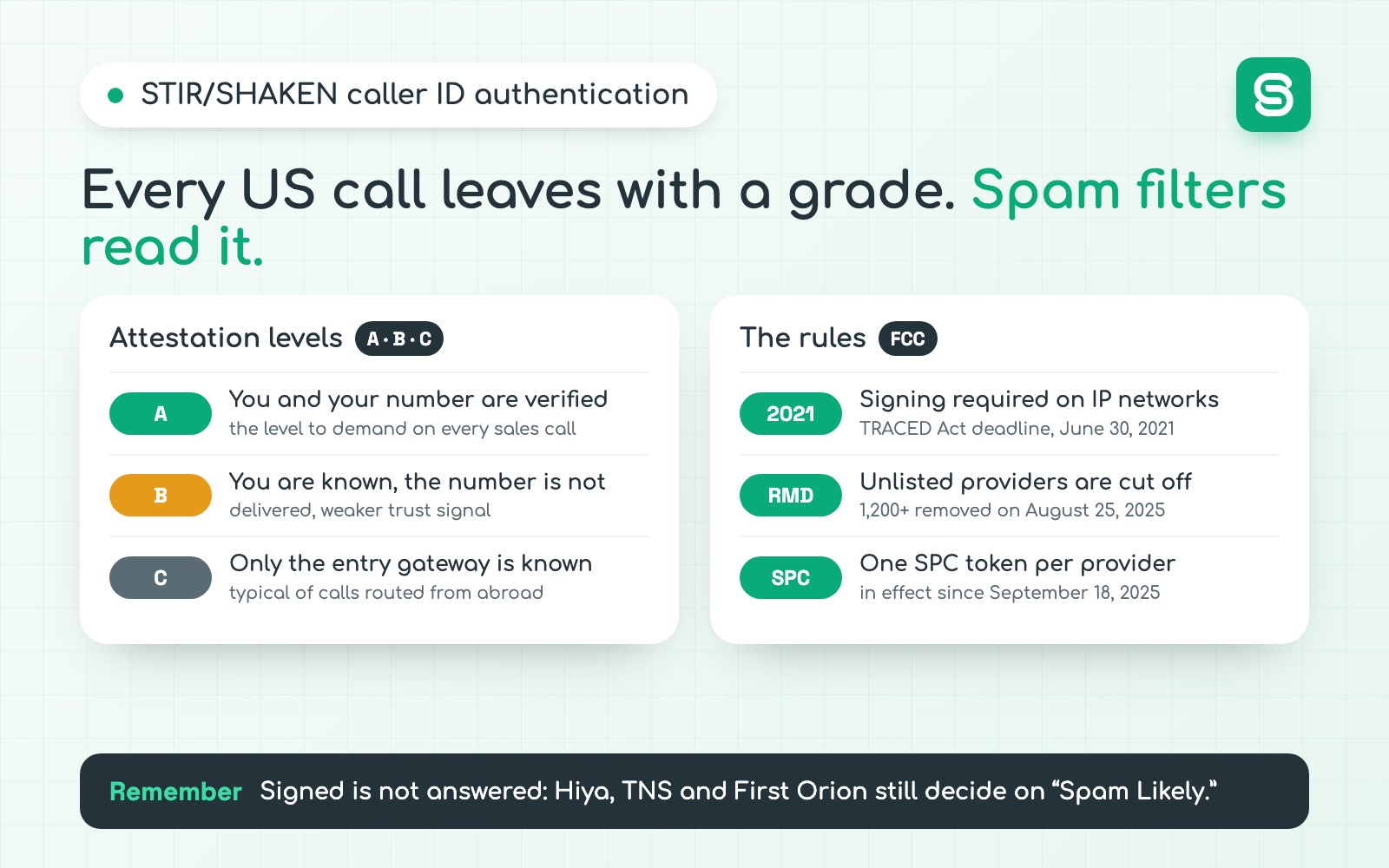
STIR/SHAKEN is the caller ID authentication framework every US voice provider has had to run on its IP network since June 30, 2021. Each call leaves with a signature graded A, B or C, and that grade follows the call to the carrier's spam filter. This guide walks through how signing works, what each attestation level means, the Robocall Mitigation Database, the own-token rule in force since September 2025, how caller ID authentication feeds call labeling and branded calling, and the questions to put to your provider before your team dials.
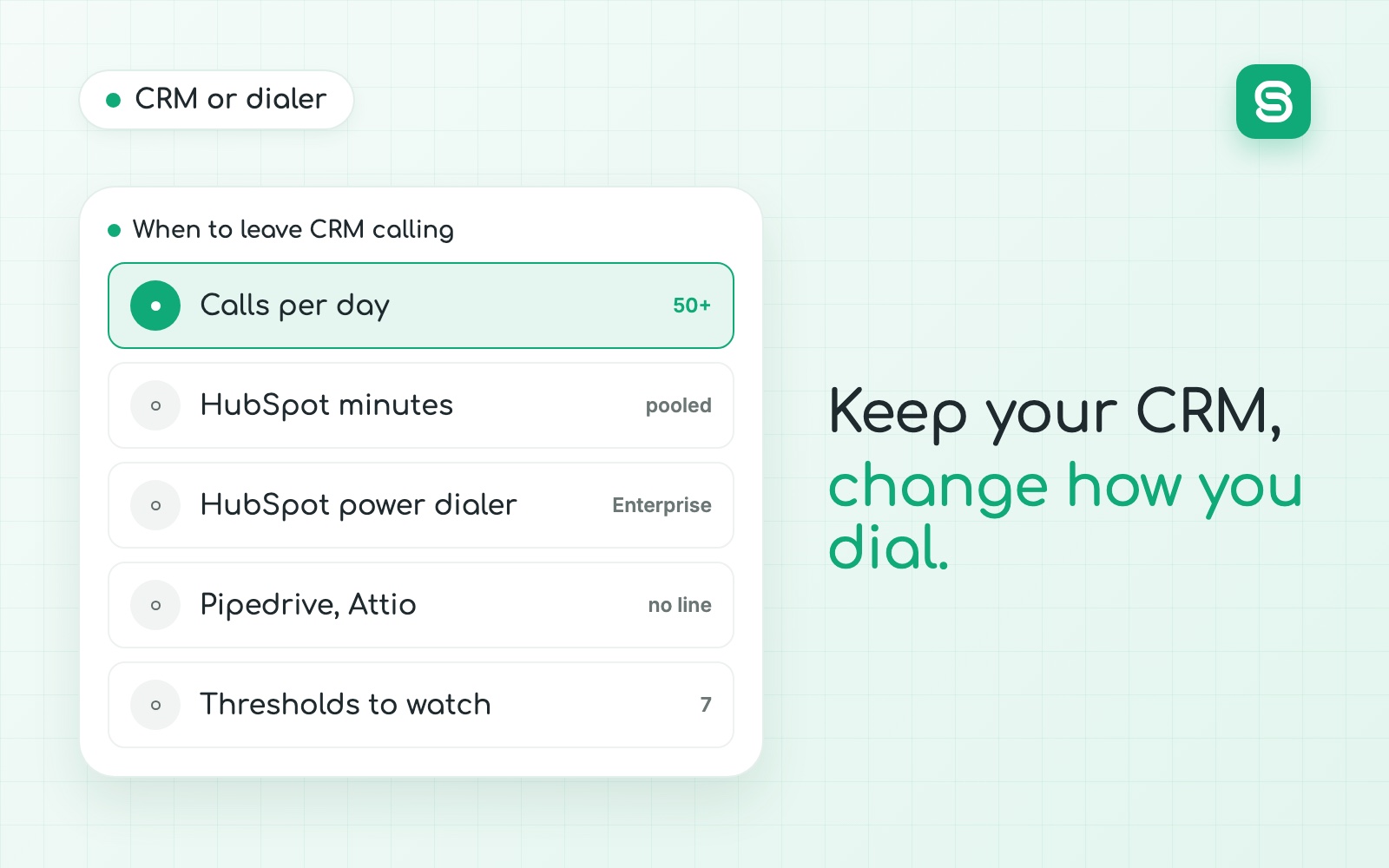
Calling from HubSpot, Salesforce, Pipedrive or Attio works fine while your team calls a little. Past that point the limits show up: minutes pooled across the account, a power dialer locked to the top edition, no multi-line dialing, no voicemail detection. This guide lays out what each native calling tool actually does (checked against official vendor pages on November 13, 2026), the seven thresholds that tell you it is time for a dedicated dialer, an eight-question quiz, the cost math, and a rollout plan that keeps your CRM clean.
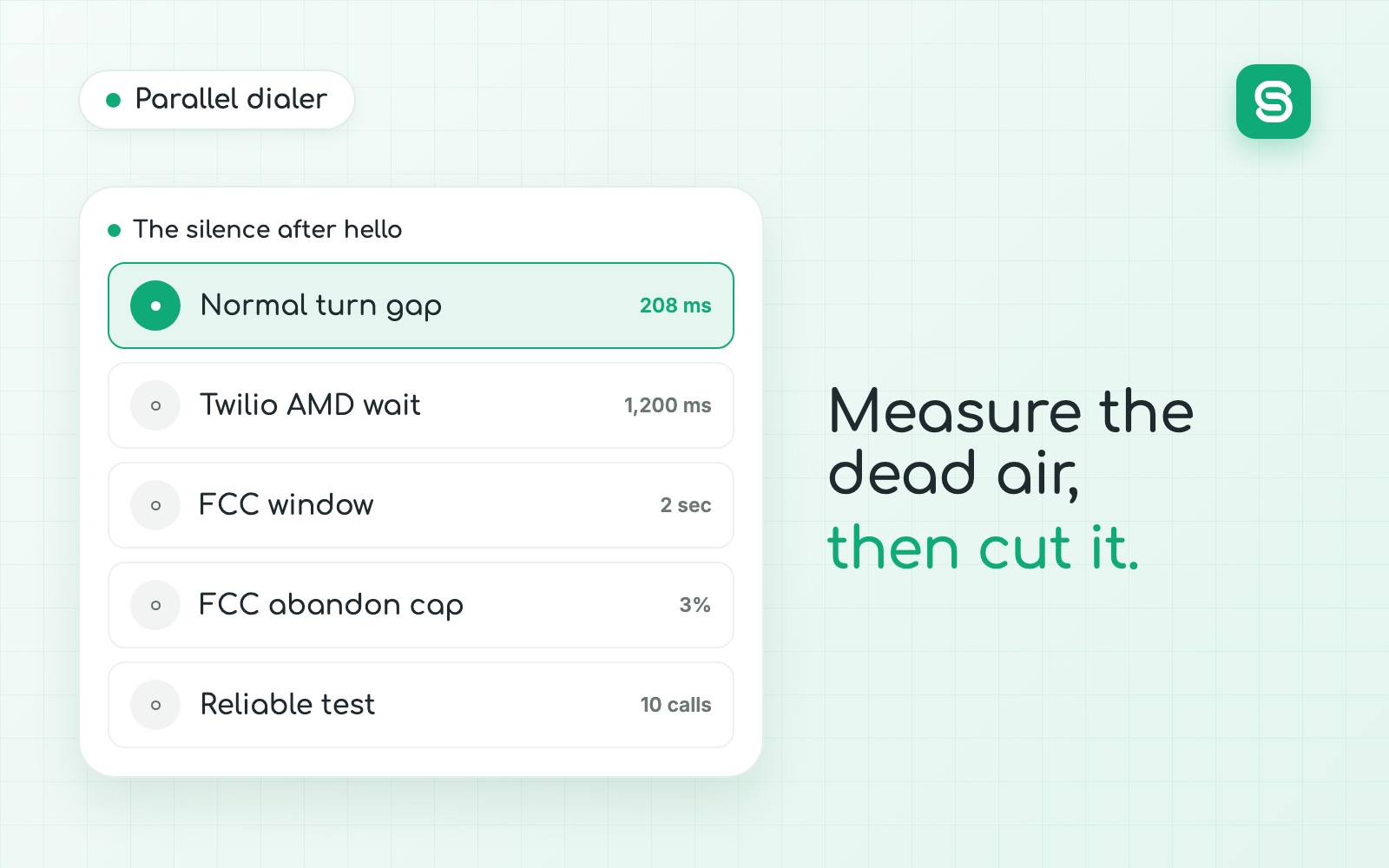
The prospect says "Hello?" and hears nothing for a second or two. Dead air is the first worry teams have about parallel dialers, and it is a fair one: it gets you hung up on and it wears out your numbers. This guide breaks the silence down link by link (answering machine detection, handoff, network, rep), explains the FCC and FTC abandoned-call rules with the 3% cap and the 2-second window, compares them with the UK's Ofcom policy, gives a test you can run yourself in twenty minutes, the settings that shrink the gap, and the lines that recover it in the first second.
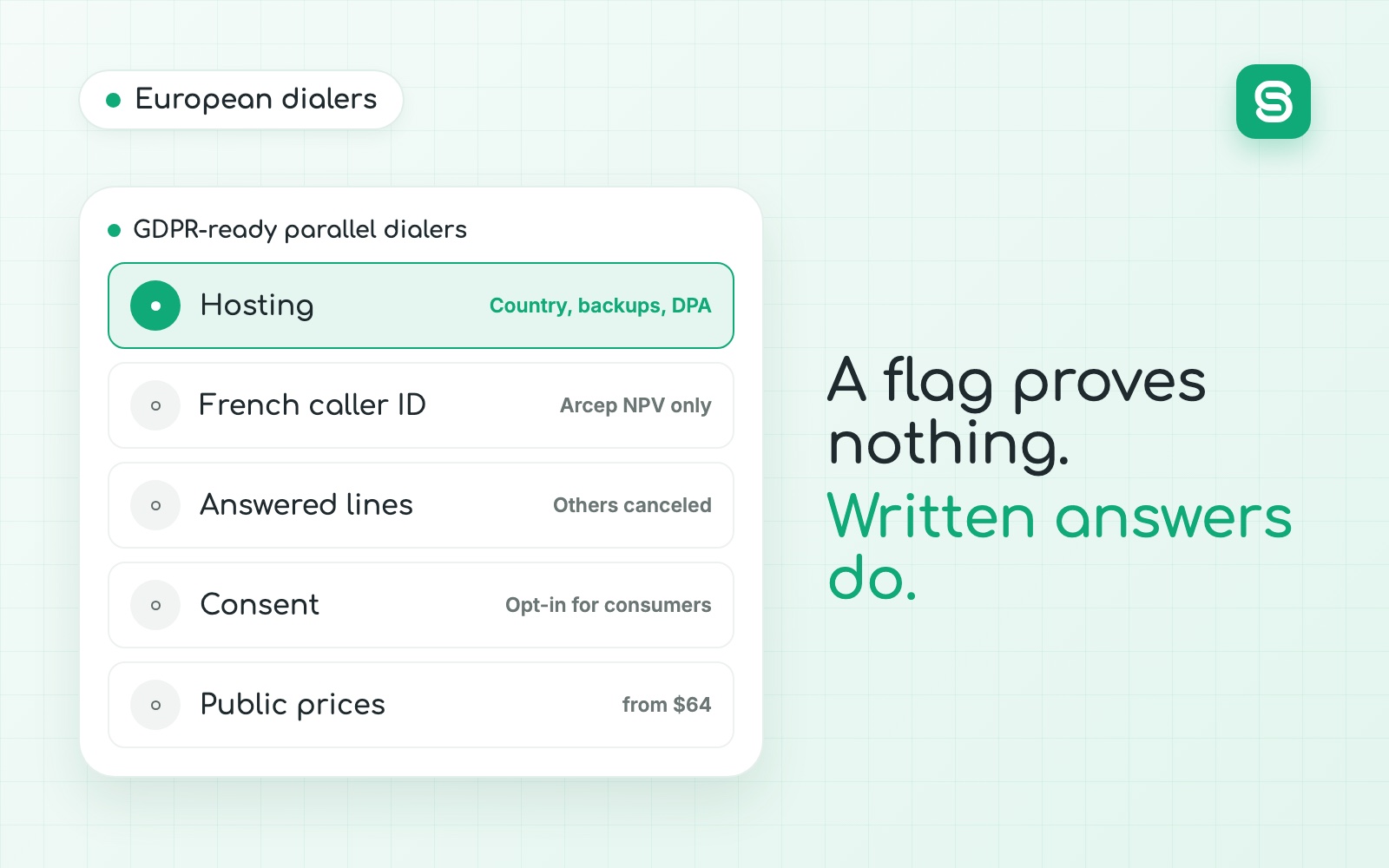
If your reps call Europe, the dialer you pick has to answer questions a US-only stack never asks: where recordings and transcripts live, which subprocessors touch them, which caller ID is legal in France, how the tool handles answered lines, and whether billing, support hours and seat minimums fit a team selling across the Atlantic. This guide gives you a situation picker, the questions to send every vendor, and seven vendors side by side with prices read on their official pages on November 13, 2026.
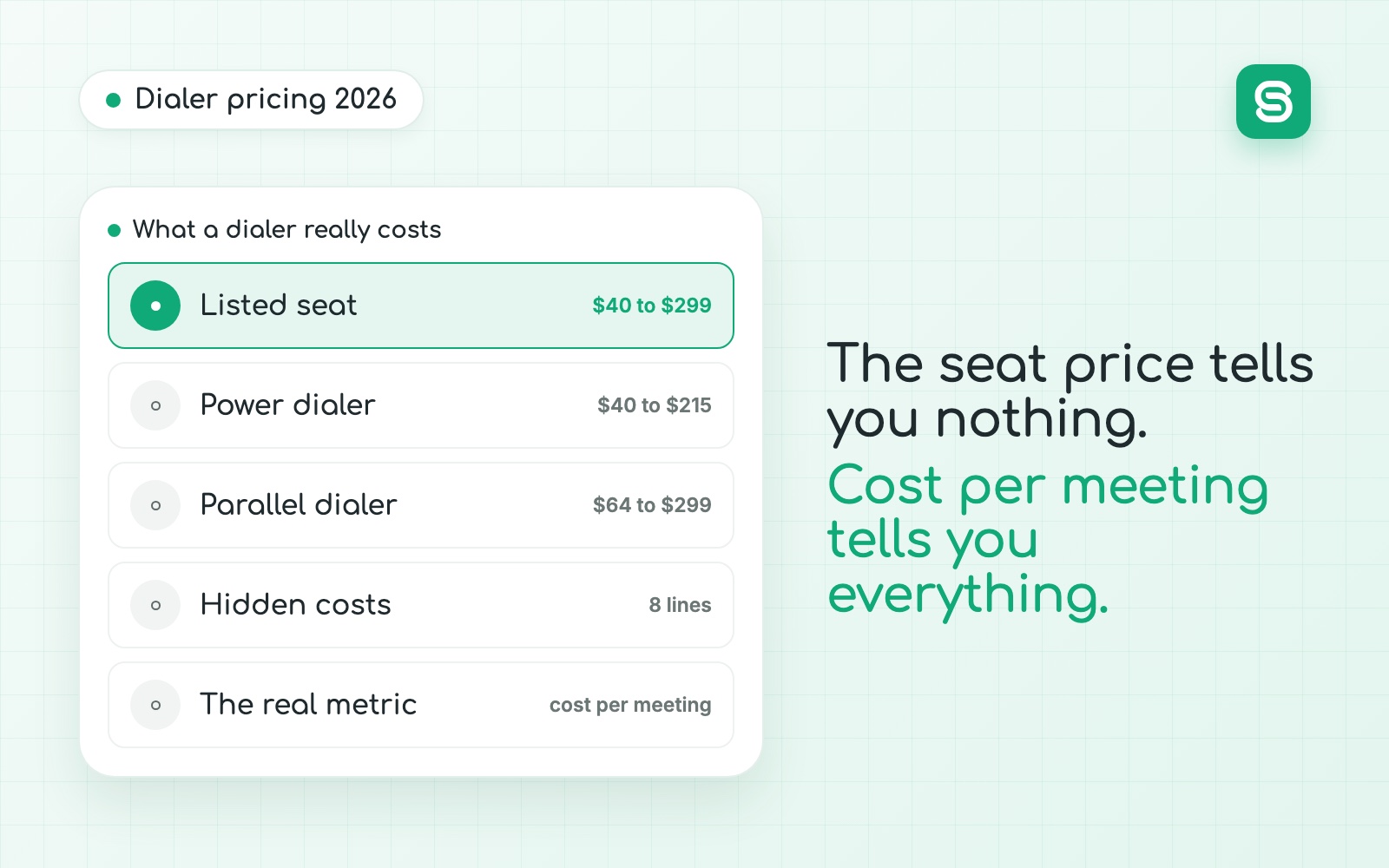
How much does a dialer cost in 2026? Public prices read on November 13, 2026 from the official pricing pages of more than a dozen vendors, the five ways dialers are billed (per seat, per minute, per line, credits, flat system fee), the costs that never make the pricing page (numbers, minutes, seat minimums, contracts, setup, enrichment, recording storage, fees), the real cost per rep and, above all, the cost per conversation and per meeting, with a calculator to run your own numbers.
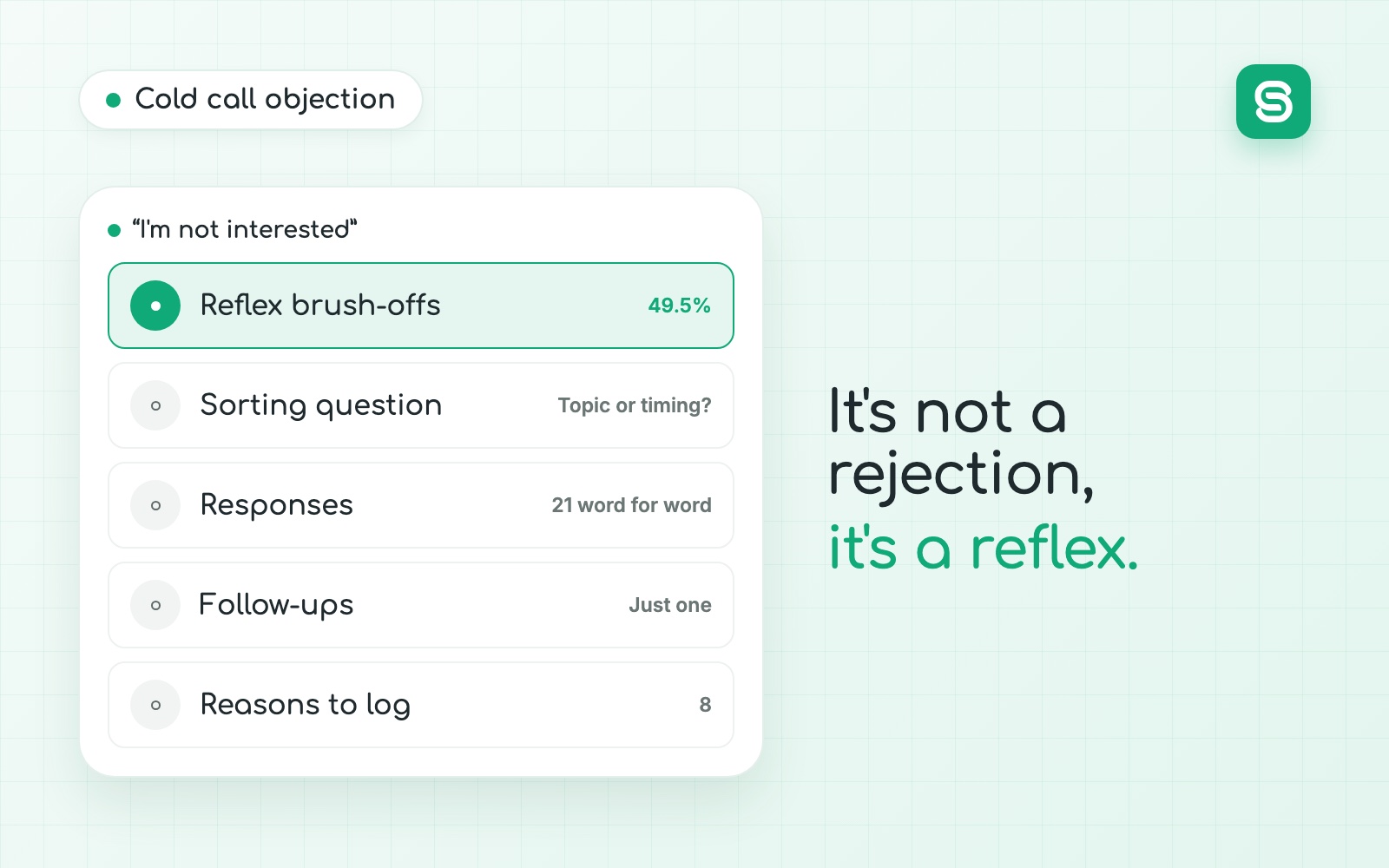
"I'm not interested" is the line you hear most on cold calls, and it is almost never a decision. This guide explains why it is a reflex, gives the clarifying question that sorts it out in ten seconds, 21 word-for-word responses grouped by situation (the first-five-seconds reflex, already have a vendor, we do it in-house, wrong person, bad timing, real lack of interest), what never to say, when to let go cleanly, and how to hear it less often.
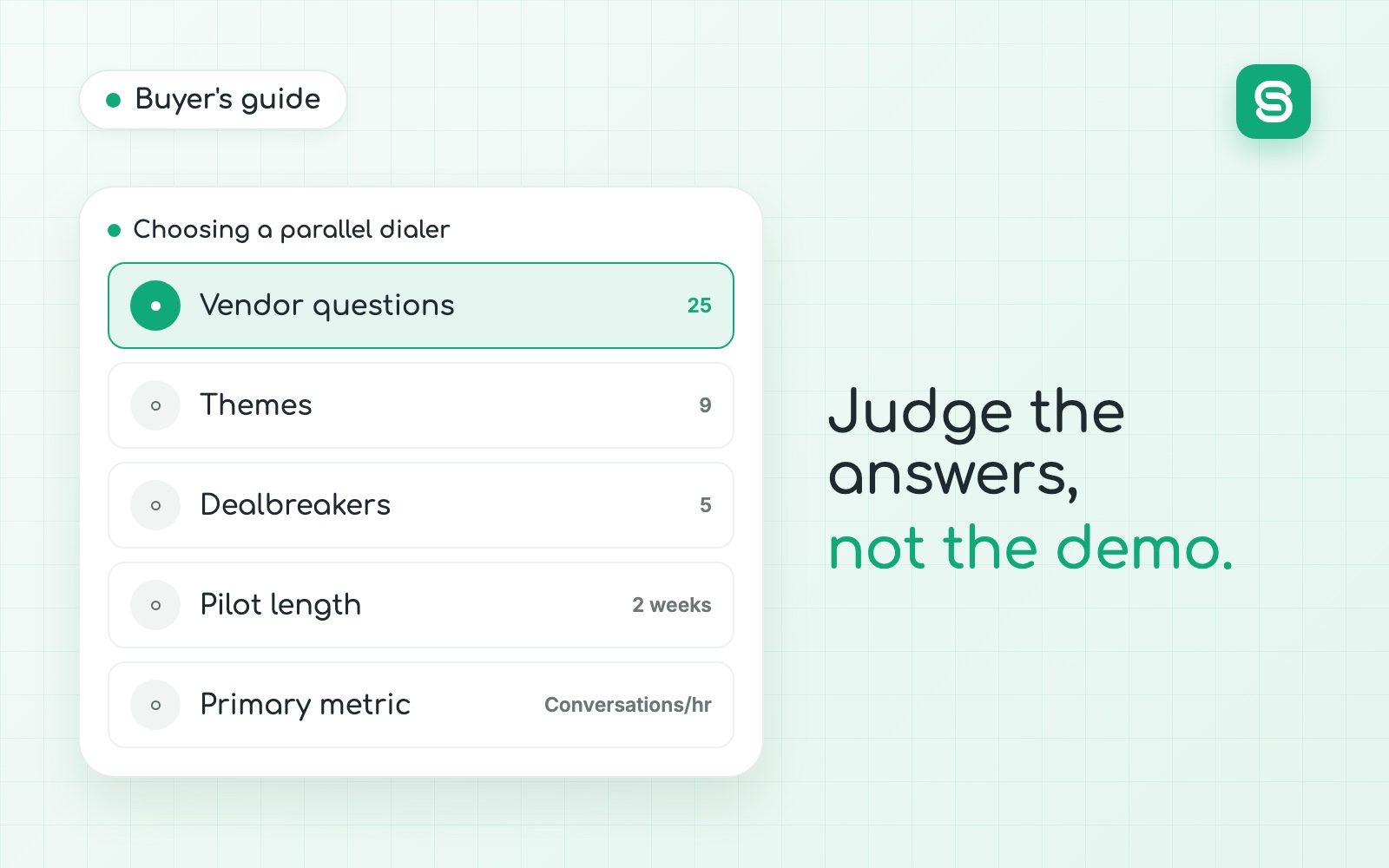
Every parallel dialer demo looks the same: four lines ringing, a prospect picking up, a rep talking. The differences hide in what the demo never shows you: the second person who answers, the dead air before the rep's voice, the live prospect mistaken for voicemail, the caller ID, the fields written to your CRM, the fees on top. This guide gives you 25 questions grouped into nine themes, the answer to expect and the one that should worry you, an interactive scorecard to compare two or three vendors side by side, and a two-week pilot plan with its metrics.
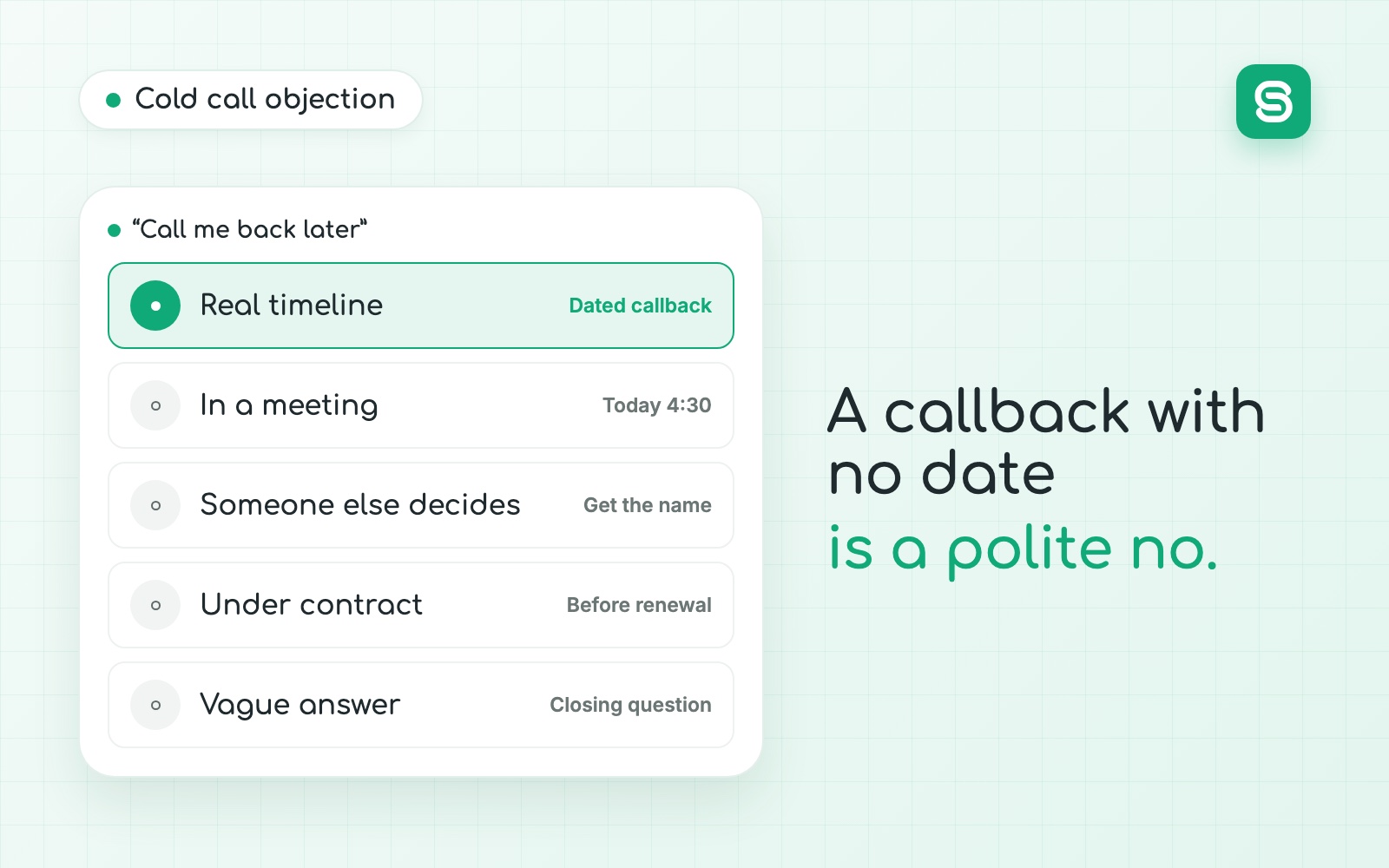
"Call me back later" does not mean one thing. Sometimes it is a real budget timeline, sometimes a meeting about to start, sometimes a polite no. This guide shows how to sort it out with one question while you are still on the call, gives 18 word-for-word responses grouped by variant (next week, after Labor Day, in six months, after budget, just email me, I'm in a meeting), how to lock a specific day and time, the note to write before you hang up, and when to stop.
Skipcall uses cookies to measure site traffic, track its advertising campaigns and offer live chat.
Learn more
These tools are active as soon as you arrive, unless you decline them. You can reject all or choose purpose by purpose; a refusal takes effect immediately. Consent is kept for six months; after a refusal, you will be asked again on your next visit. You can change your mind at any time via "Manage cookies" at the bottom of every page.






 By Charles Baldet 30 min read